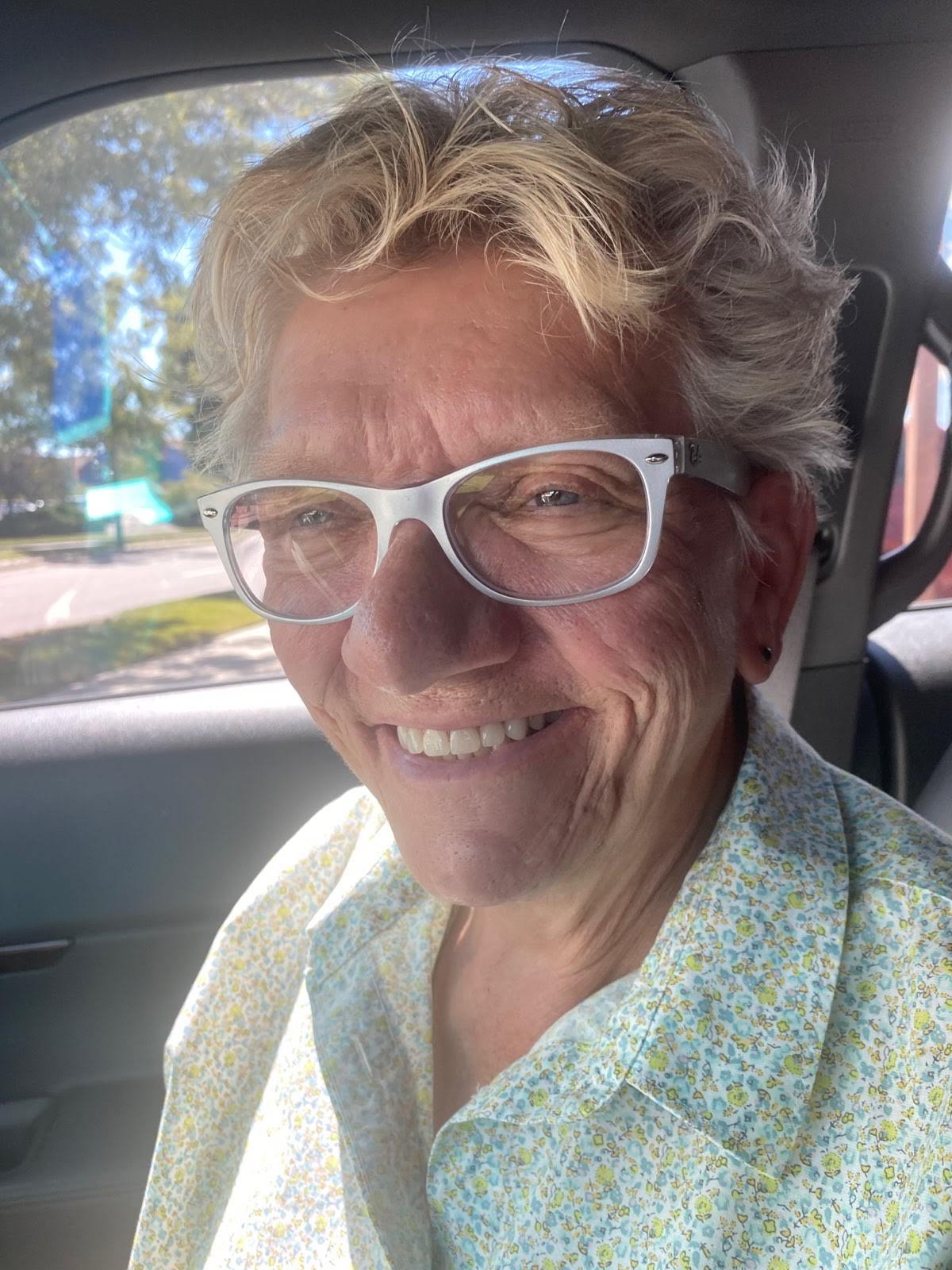
My mom, Jacqueline Vera Block Haag, died early on Saturday morning, September 16, 2023.
She was diagnosed with recurrent metastatic breast cancer in December 2023. The best case was we might get three years with her; the worst, she would be in hospice within months.
Well, we got 10 months.
I wish we had been able to do more together in that time, but politics and strong opinions and a determination that holistic options are the only valid options got in the way.
After my visit in June, Mom got a drain implanted to remove the fluid that was slowly collapsing her lungs. Within the first week, she had removed over a gallon of fluid, 200 ml at a time. She could breathe again, start to walk again, and sometimes, her voice returned. She found out she wasn’t actually allergic to a number of foods she had avoided for decades – and enjoyed tasting foods she hadn’t eaten in years. I started to think maybe we’d get a decent amount of time with her.
It was the calm before the storm.
Like many advanced cancer patients, she was doing great until she wasn’t. And the decline was precipitous. By the time I was looped into how poorly her condition was, she hadn’t really been eating for a week. She couldn’t walk anymore. Her handwriting, the way she was able to communicate with Dad and us effectively, became illegible. Her body failing was clearly frustrating her.
My dad became her full-time caregiver; my sisters visited when they could but mom would be sleepy and visits were around 5 minutes. She continued to lose muscle and weight and increased her oxygen needs to roughly equate to 2 gallons of air being pumped into her lungs every minute.
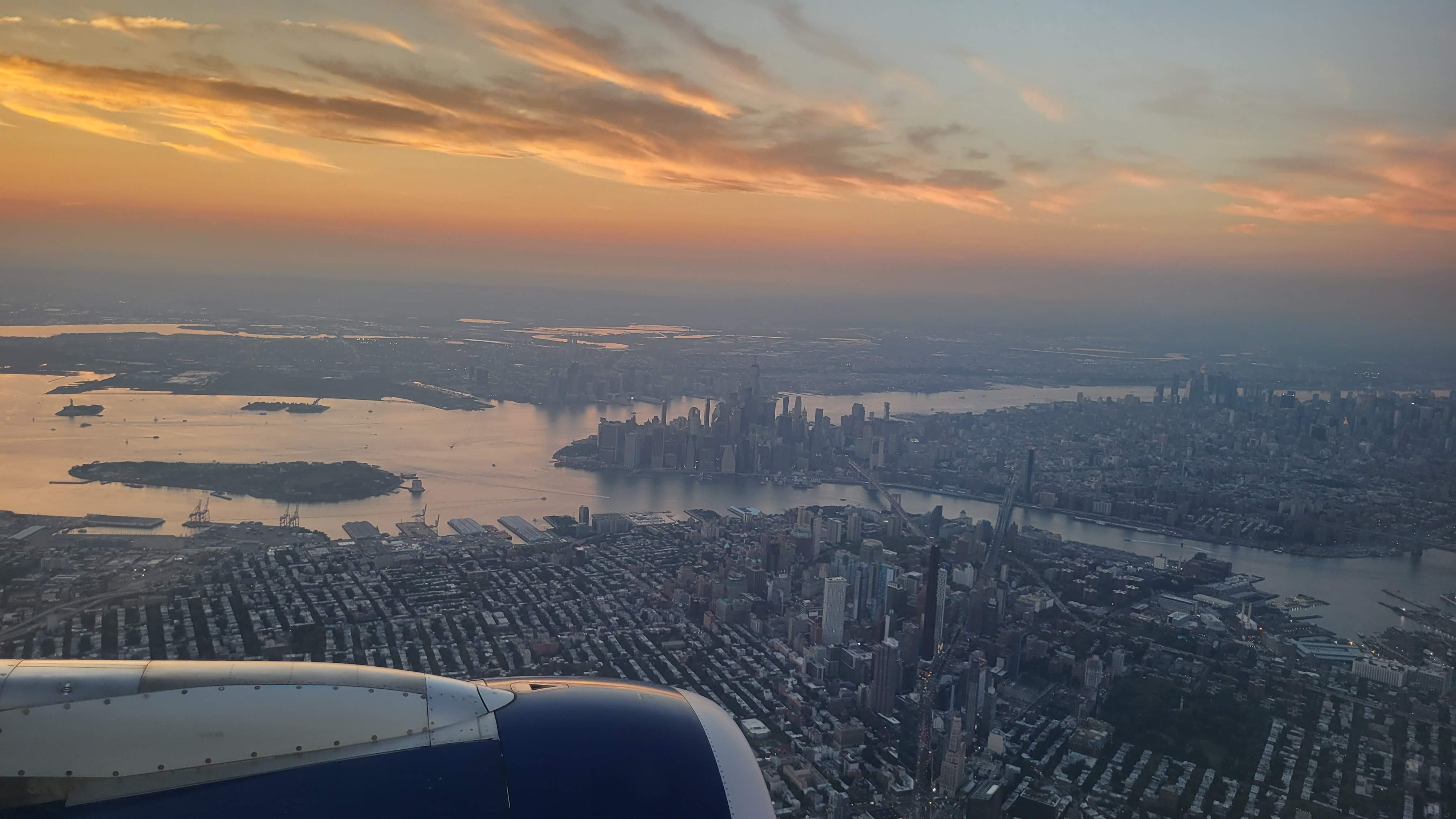
Dad gave her hospice nurse permission to talk to me about Mom and I got the real story for the first time. I am so thankful. I was able to book a flight home the next day.
On Friday, Sept 15, I spent the whole day with Dad and Mom. Exactly 7 years prior, she completed her radiation for the first round of breast cancer and rang the bell. I was surprised to see her sitting in her living room chair, but her eyes lit up and she smiled when I walked into the house. I gave her a hug; she was just skin and bones now.
I asked her if she had read about my last bike trip and she shook her head. I asked if she wanted me to tell her about it; she nodded. As I started to tell the story, she put her head down with her hands on the rolling table and motioned for me to keep talking while she rested.
So I told her about the trip. I talked about when we rode Elephant Rock together and when we rented fat bikes to go ride in a creekbed. I talked about my kids and how much they love her.
Mom hadn’t pre-planned her final wishes. So I asked what she wanted and made sure she nodded affirmatively after dad told me what they had discussed. I called a funeral home and got things set up.
Mom rested on the table a lot while I sat with her and chatted with my dad. I gave her a tiny amount of avocado for lunch.
When the hospice nurse came by, she was alarmed Mom was in her chair and insisted we move her back to her bed to avoid the risk of falling. Despite the high flow oxygen, her pulse-ox was only 91. We rolled her into her bedroom and got her sitting on the side of the bed. She immediately leaned into my dad and hooked her hands into his pockets. It took a bit, but we were able to give her the meds to help her relax and breathe easier.
I gave my mom a hug and she leaned into me before kissing my arm and whispered that she loved me so much.
The last thing I did was help mom get her legs into bed, find her sea turtle plush that she slept with, and smooth her bedding over her. I told her I’d be back tomorrow.
The hospice nurse told me what was to come next and I am so thankful she did. I relayed that information to Dad and I think we both hoped for at least one more day.
The next morning I am woken by a series of vibrations from my phone; that usually means lots of text messages are coming through. As I looked at my phone my sister came to where I was sleeping and said “Dad said Mom is not responsive. Are you ready to go over?”
We threw on our clothing, made coffee to go, and raced over there. We alerted our sister who had driven all night from Texas; she and her kids paid and left their breakfast spot immediately. My youngest sister had to drive across town.
I want to believe Mom was still able to hear us when we arrived, but it’s also possible she was already gone. We sat with her and cried, held her hands, and stroked her hair while we told her we loved her, that it’s OK to let go. She’s been through enough. My youngest sister collapsed on the floor when she saw Mom; Dad got on the floor to hug her and cry with her. We all have different ways of coping with immense grief. We all were able to say what we needed to say.
We took turns staying with her body until the hospice nurse came and confirmed what we all knew; Mom had passed. She carefully cleaned up Mom for the funeral home to take her body.
I will never forget how compassionate and loving all of the hospice and funeral workers were. They treated Mom with dignity and respect and informed us of everything they were doing. I am so grateful to those who answer that calling to be with families during their time of enormous grief.
A few hours later, two of my sisters and I decided to go for a strenuous hike to help work through our emotions. We listened to music that reminds us of Mom on the way over. The ability to talk and push our bodies a bit helped give us space to grieve.
We made sure to be with Dad, to cry with him and remember Mom. Friends started delivering food to us, so we had dinner together as a family for a few nights. We helped Dad make a checklist of things he needs to do to close out mom’s accounts, notify people of her passing, and begin the process of donating or selling things he no longer needs. I wrote Mom’s obituary from a 4-hour conversation with my dad about their life together; my sisters helped me edit it for clarity and consistency.
And then real life came back – I flew home and we all went back to work until the funeral, which is next week. It was a nice distraction. But I won’t lie – my mom’s passing has reminded me just how short life is and I don’t want to waste any more time living 2,000 miles away from my dad, my sisters, and my nieces and nephews.
I’m thankful I got to be home with my mom and spend so much time with her on her last day with us. I’m thankful for the love and care my dad gave my mom in her final months. I am thankful for the hospice team and the funeral home team for their professionalism, compassion, and empathy. I am thankful I was able to come home to my own family and be given space to grieve. I am thankful to my boss and my coworkers for not just covering for me, but encouraging me to take as much time as I need.
We’re flying out for the funeral next week and I know that will be deeply emotional. Things will be Final Final. I expect grief will come in waves and hit especially hard when life’s brightest moments happen and I can’t share it with my mom. But I am also thankful that she is no longer suffering because cancer is awful and destroys one’s body.
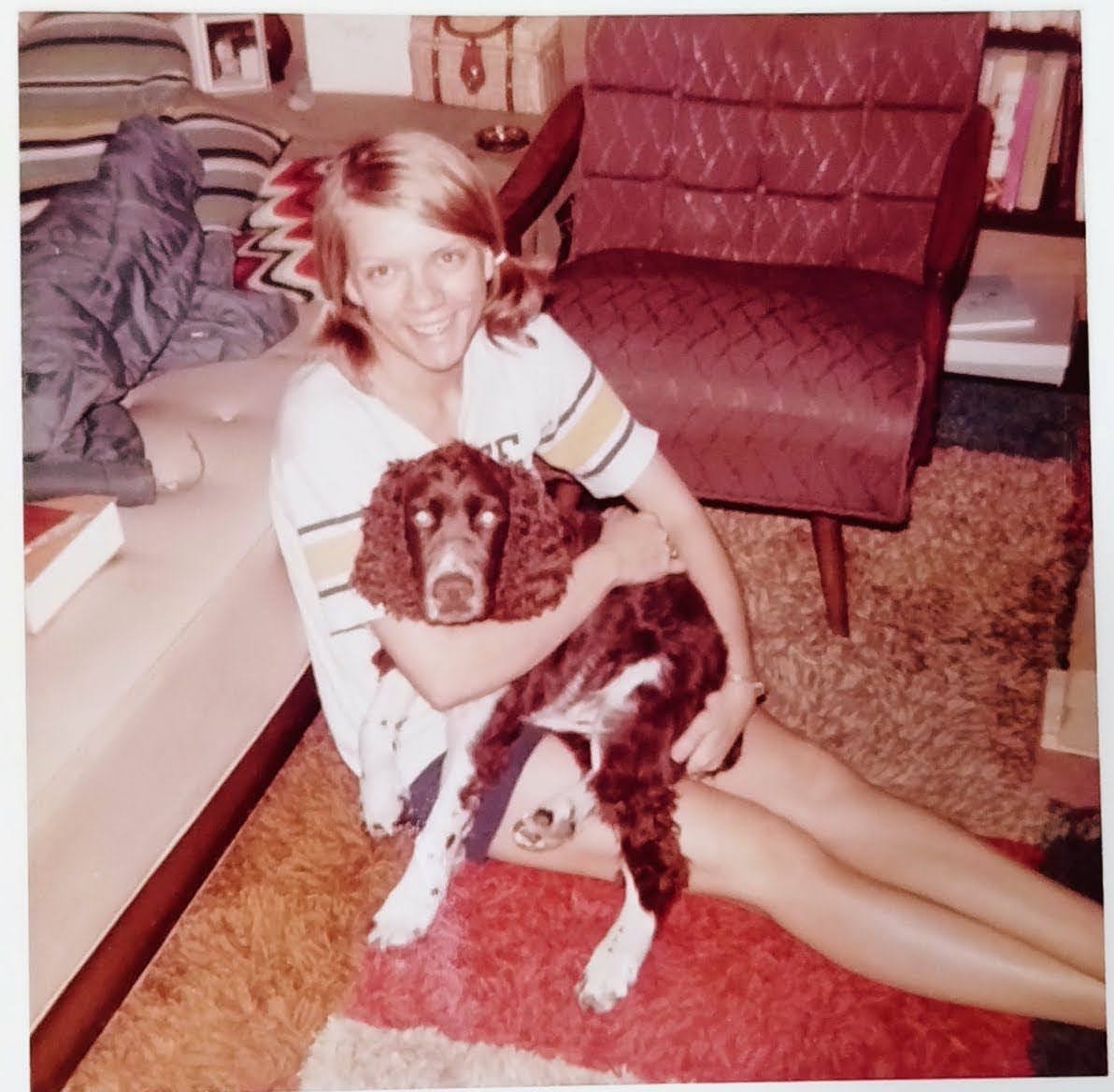
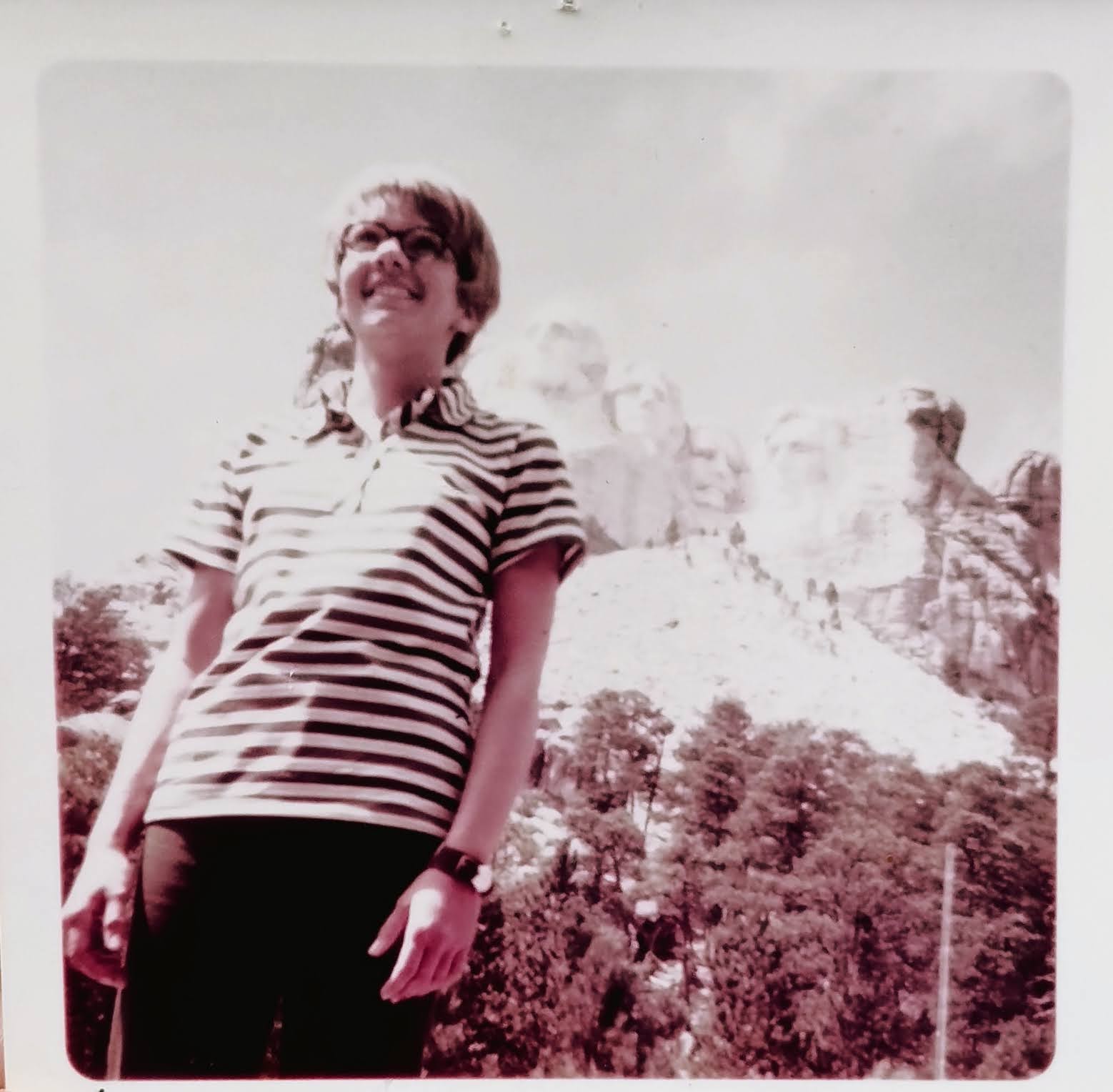
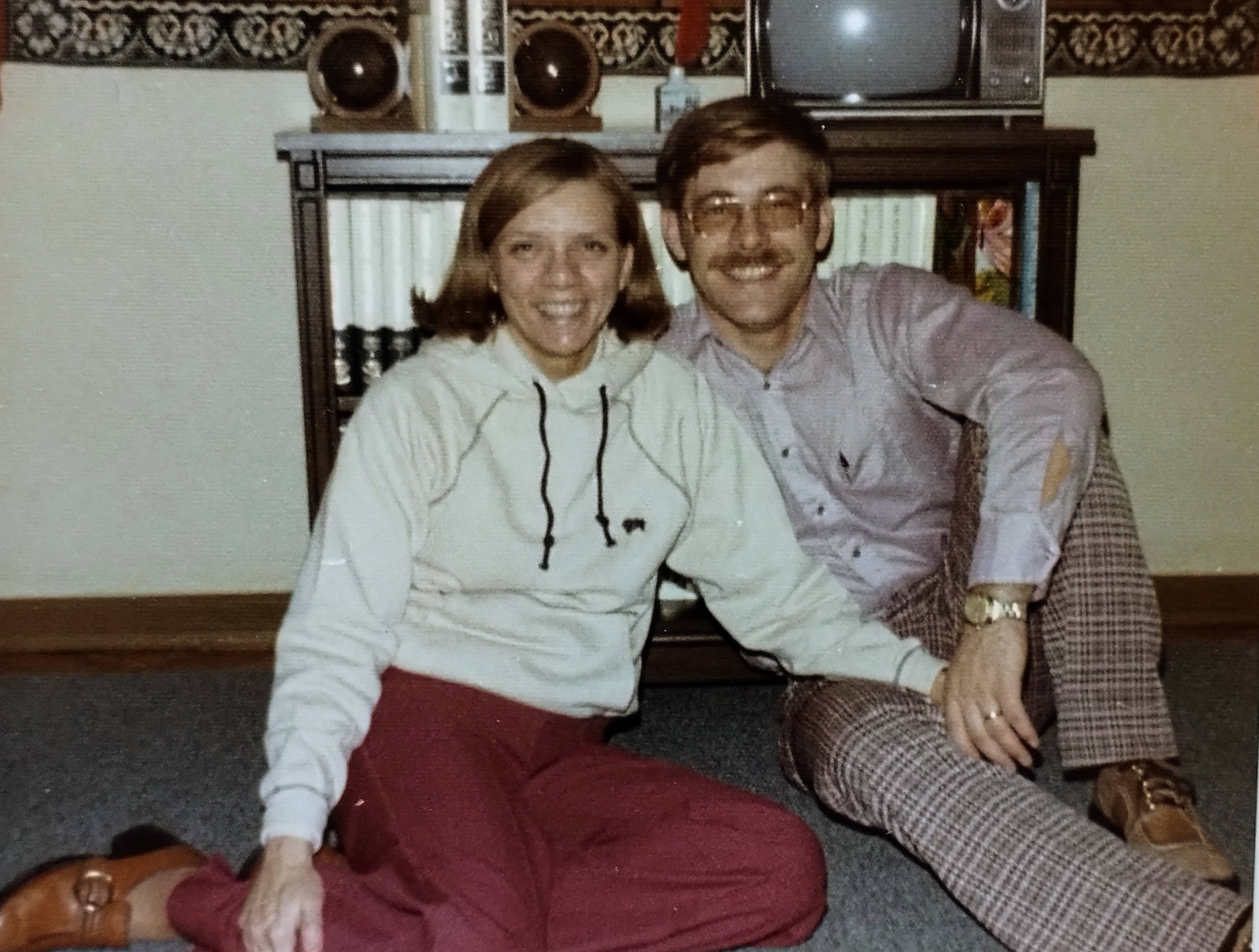
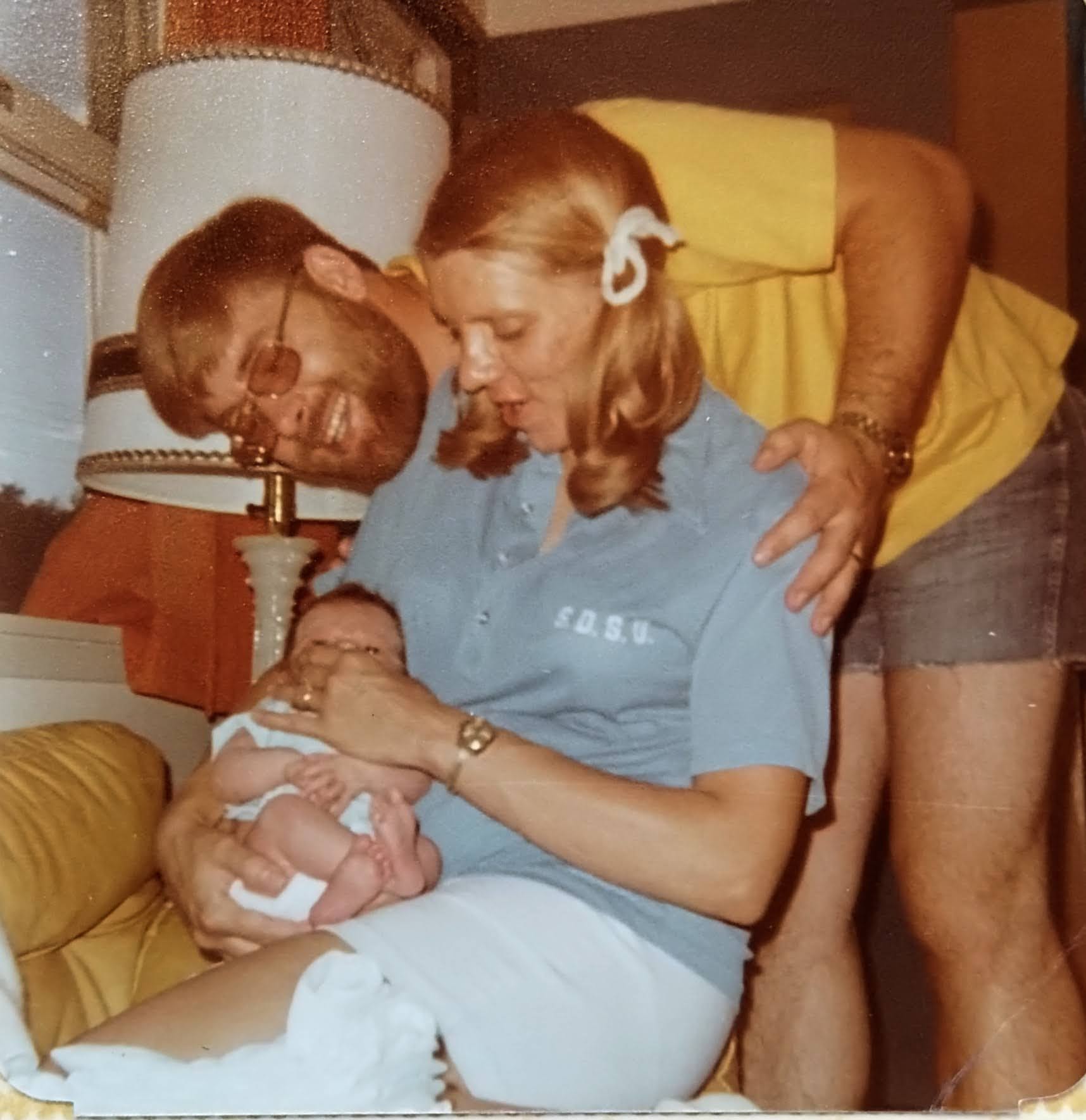
She was a mom of four girls, a grandma to seven grandkids, an educator, an entrepreneur, a community organizer, and never backed down from an opportunity to stand up for what was right.
She loved spaniels, gardening, sewing, and cooking. Her personality filled the room and she always had big ideas. She remained active as long as she could – hiking, riding bikes, walking. She attended law school in her 60s and was active in her faith community.
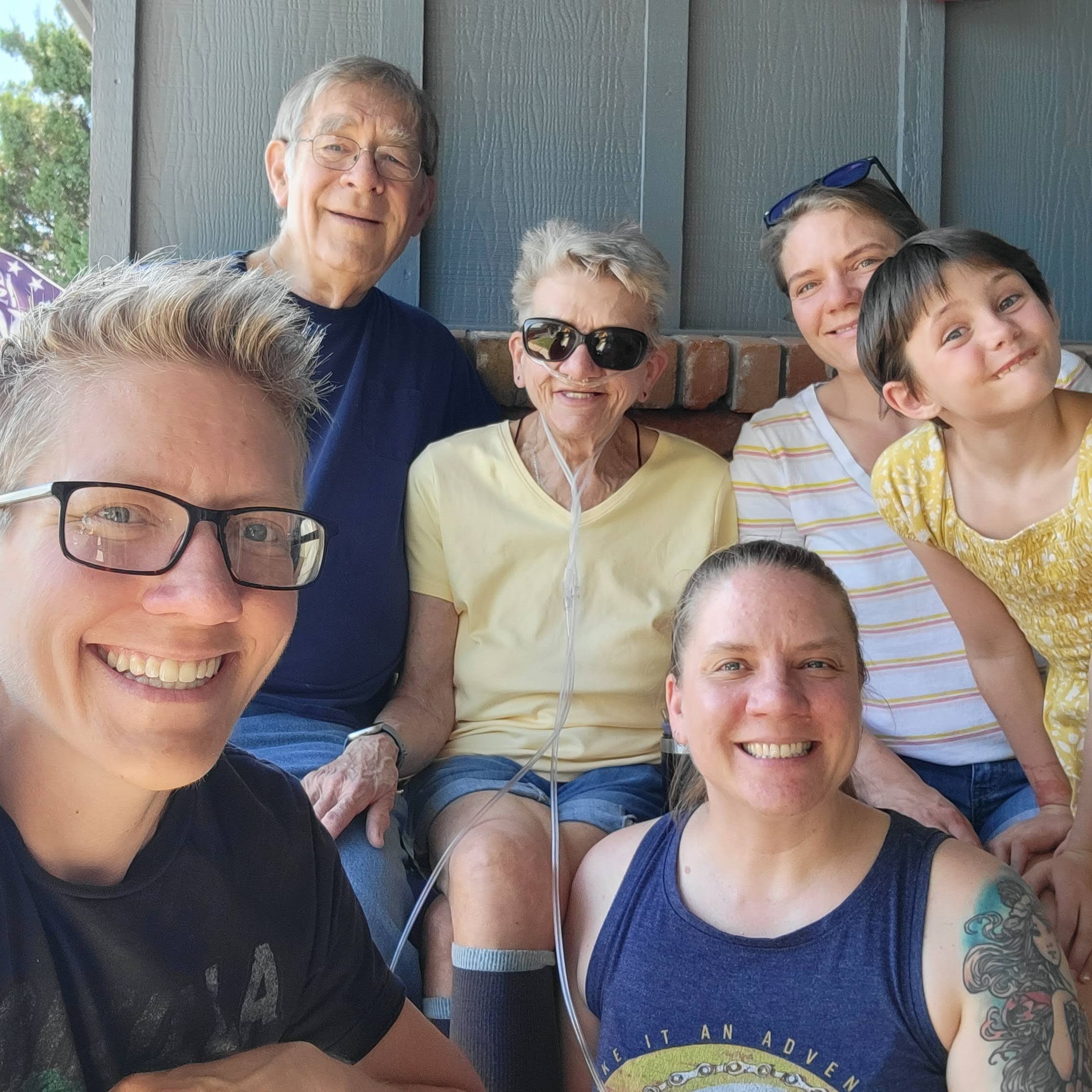
Dad and Mom with three of their daughters and one of their seven grandchildren
Along the journey, Jess and I fielded a lot of questions from others on how we got to the place of actually going on the trip came together.
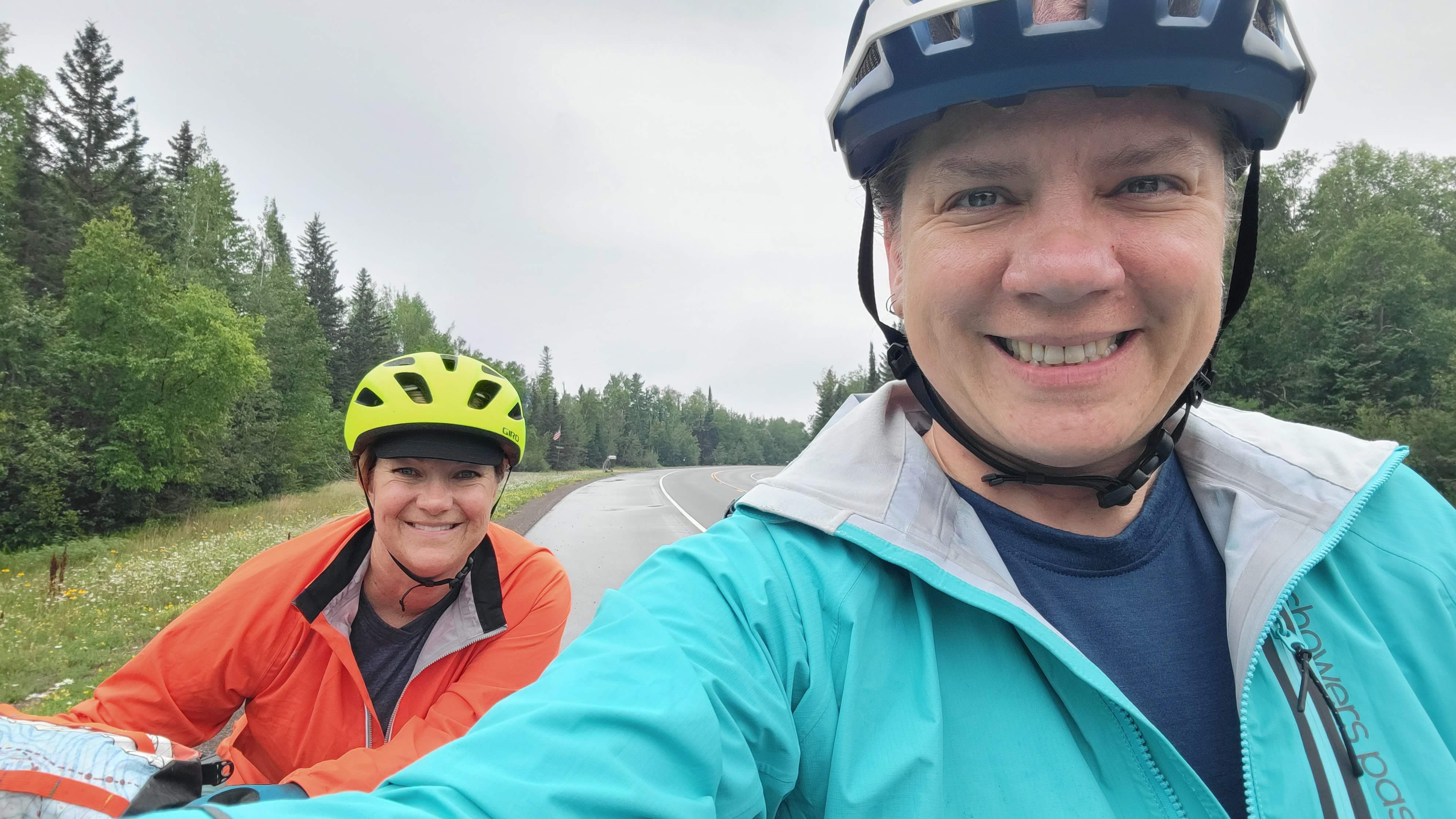
First, no – we aren’t sisters. We were internet friends for a bit because I knew Jess’ husband when we were younger. Our first time meeting was on the Green Mountain Gravel Growler 2021 trip – and it was so much fun. So it felt organic to do another trip together.
Second – it takes a lot of planning to go on an epic journey. This was our first time doing a multi-week bikepacking trip – and our first multi-week trip with camping as the primary lodging accommodation. But camping helps keep the overall costs down (even if we did have to bring all our camping gear as well as our bikes and bags on the plane).
My goal is this post will help others feel confident in planning their next big adventure.
Getting There
We don’t live where we were going to ride, so we weighed the options: drive out or fly out. My drive would have been longer than Jess’ (20 driving hours) – so flying was the obvious choice to minimize the number of days off we needed to take from work.
Most airlines have policies around traveling with Sports Equipment so be sure to check out your airline of choice’s rules. I flew on Delta, which allows bicycles as a checked bag (provided it meets the dimension and weight requirements); Jess flew on Southwest, which features a flat fee for bicycle bags over 51lbs (provided it meets the dimension requirements).
Of particular note is the 50lb weight limit. You might think that since your bike isn’t anywhere close to 50lbs you’d be OK – but the bag itself weighs somewhere around 20lbs. Jess used the Dakine Bike Travel Bag (18lbs) and I used an EVOC Bike Travel Bag (19 lbs). Both are excellent choices for air travel and require only a minimal amount of bike disassembly to pack.
Jess crammed as much as she could into her bike bag because Southwest doesn’t charge for the first two checked bags and has a flat fee for bike bags weighing 51- 100lbs. I incurred Delta’s overweight and checked bag fees because my bag weighed 55lbs, which was due to the inclusion of my bike, 2.2″ tires, rack, 3 water bottles, shoes, and helmet.
We also had to bring all of our gear – not just a change of kit and snacks, but also our camping gear and food. Most camping gear can be put in checked baggage so I stuffed everything into a 7-day suitcase that came in at 43lbs (Jess had a larger carryon sized suitcase for the rest of her gear).
Of note, you cannot bring camp stove fuel or bear spray – even in your checked bags. We purchased these items from an REI in Minnesota and picked them up on the way to Duluth.
Campgrounds, Ferries, and Layovers
It was important to us that we knew where we wanted to try to stay each night before heading out.
August is apparently a heavy tourist time for the Northwoods, so we booked our sites in advance as soon as the ability to book a site came up. Jess started booking campsites in January and didn’t stop until sometime in March when the last few campgrounds opened their booking windows.
The only campground we missed was for the first night in Minnesota (Gooseberry Falls) and the second night in Wisconsin (Two Lakes). The first sold out almost instantly; the latter we didn’t realize we’d booked a campsite at the wrong campground until the night before. Both times it worked out, but to avoid the stress of trying to beat holiday travelers to first come first serve sites (which you very likely will not get, especially on a weekend) – book ahead of time. It also gives you a stopping point to look forward to each day.
It also pays to keep trying, even if the campground is full. The third night in Michigan, we had intended to try to get a spot at a rustic campground that is first come first serve because the state campground we wanted was closed for renovations. However, when we rode by, it was actually open and we had our pick of available sites. The ranger said it was a last-minute decision to reschedule the renovations so the campground was slower than usual.
lake views from our tents
The ferries to and from Isle Royale National Park had a bit of scheduling to maneuver around – but it wasn’t onerous or overly complicated. The ferries don’t run every day from Minnesota but they do from Michigan. For planning we picked a date range and then figured out when the ferries were running based on our planned route and adjusted accordingly. We then reached out to the operators to confirm how to book our bikes for the trip as well and got on their manifests.
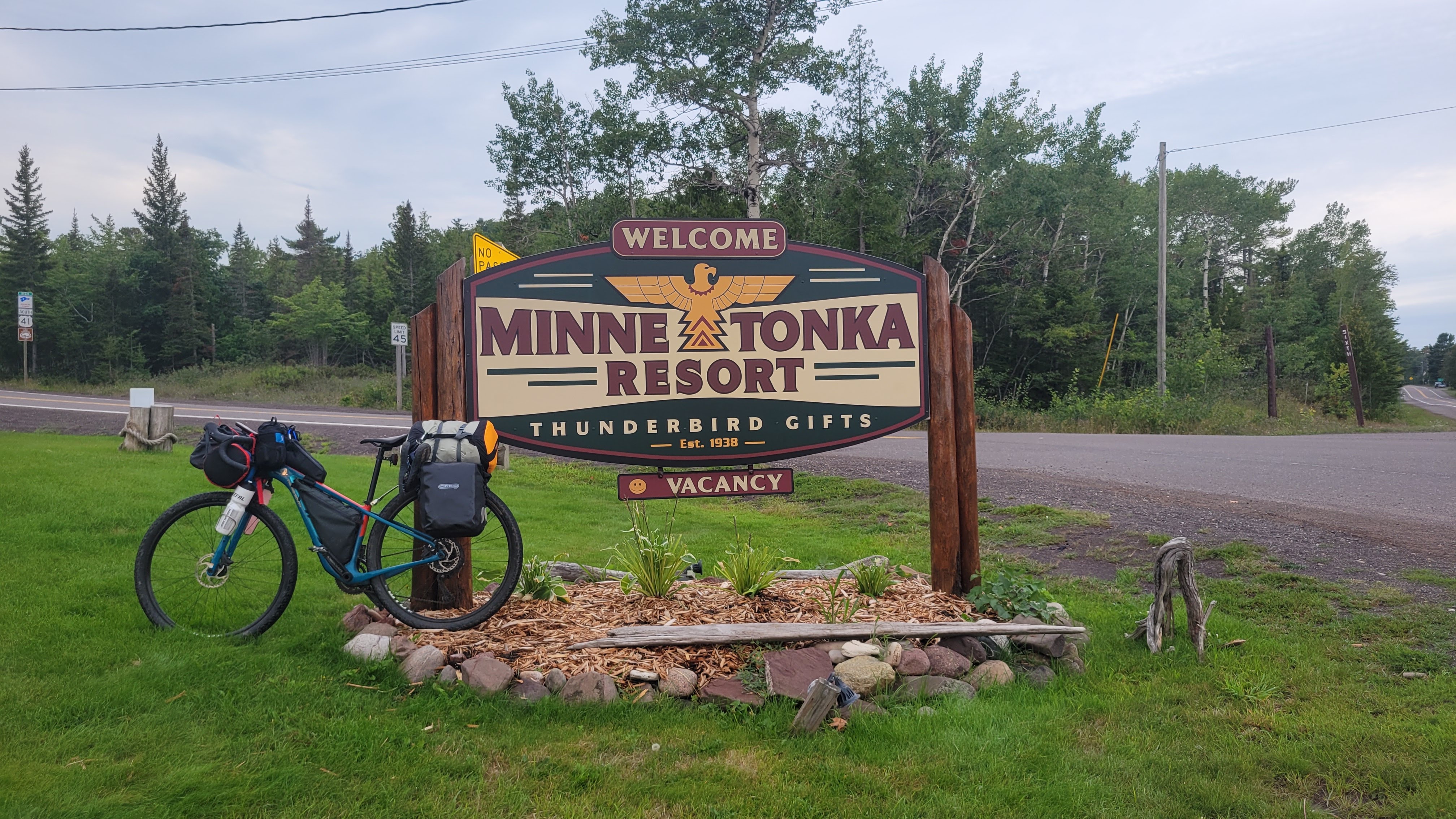
We also booked all of our indoor lodging in advance as well. This gave us peace of mind as well as targets to look forward to when setting up camp again. Booking ahead is how we got the cute cabin at the Minnetonka Resort instead of a boring motel room. We also were able to build in an additional layover day between Michigan and Wisconsin that we could use – or not use – as we felt.
Things We Couldn’t Live Without On This Trip
Many people asked us what was the most important thing we brought as well as what did we wish we hadn’t brought or didn’t need.
We tried really hard to think of something we brought that we didn’t need and could have left at home and came up with nothing. Even things we didn’t break out were things that could have been needed (first aid kits, trowels, water filters and Aquatabs).
We agreed the number one best thing we brought was theGarmin Messenger satellite tracking device. Our families back home felt at ease being able to track our location and communicate via text, even without cell service.It’s small (3″ x 2″) and light (4oz), making it easy to find a home for on our bikes (I stashed it in one of my handlebar-mounted Mountain Feed Bag mesh side pockets). The Messenger has flexible monthly plans, so you aren’t paying for service when you aren’t using the device. I chose to pay for Search & Rescue insurance to offset S&R costs should that be a necessary action.
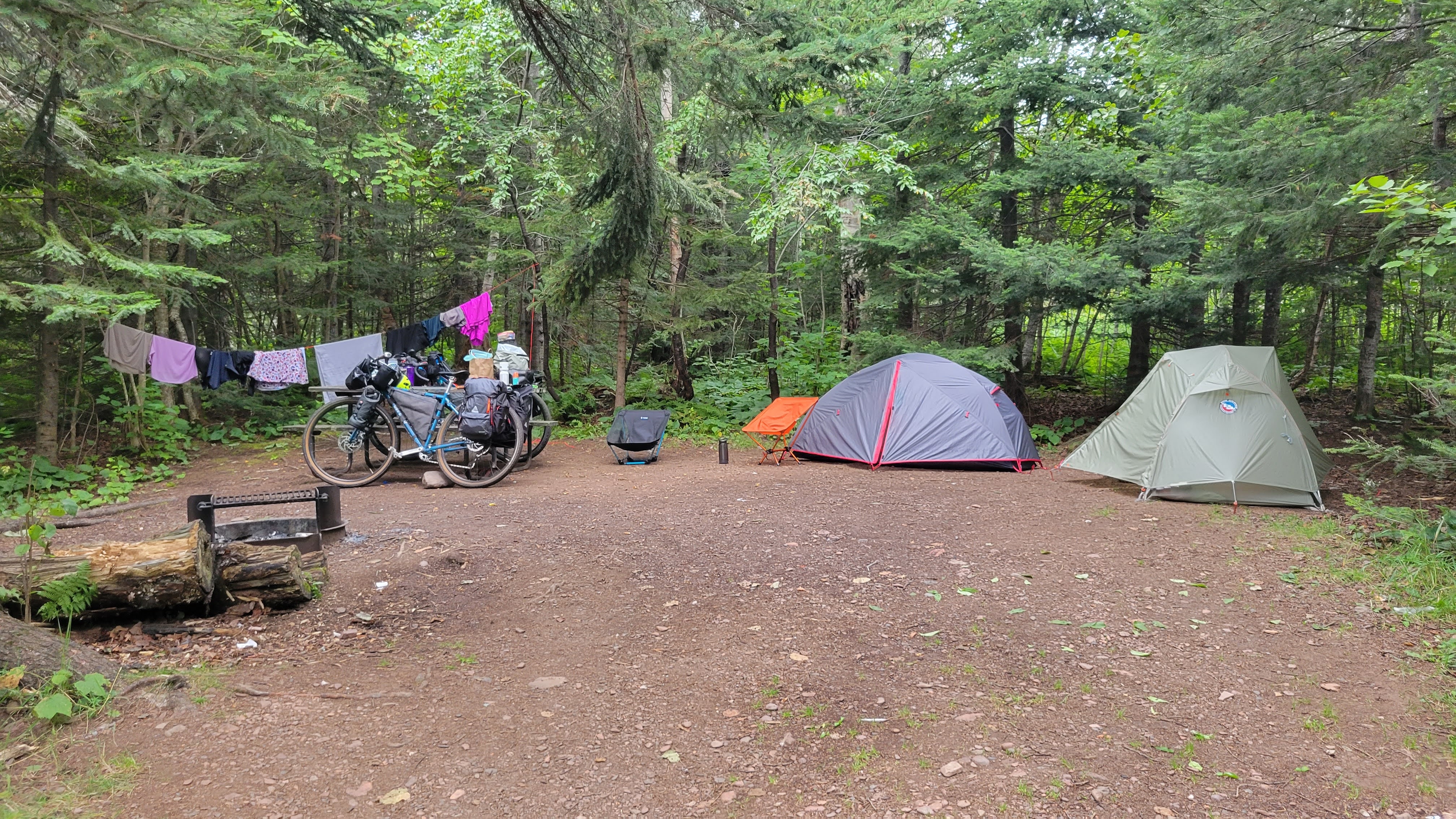
Another item that some may think is frivolous, but we found this item to be worth its (less than 2lbs) weight: backpacking chairs. Jess had an REI Flexlite chair; I had a Helinox Ground chair. We had these chairs out at almost every campsite – to relax, to eat dinner or breakfast, or just stare out across the lake.
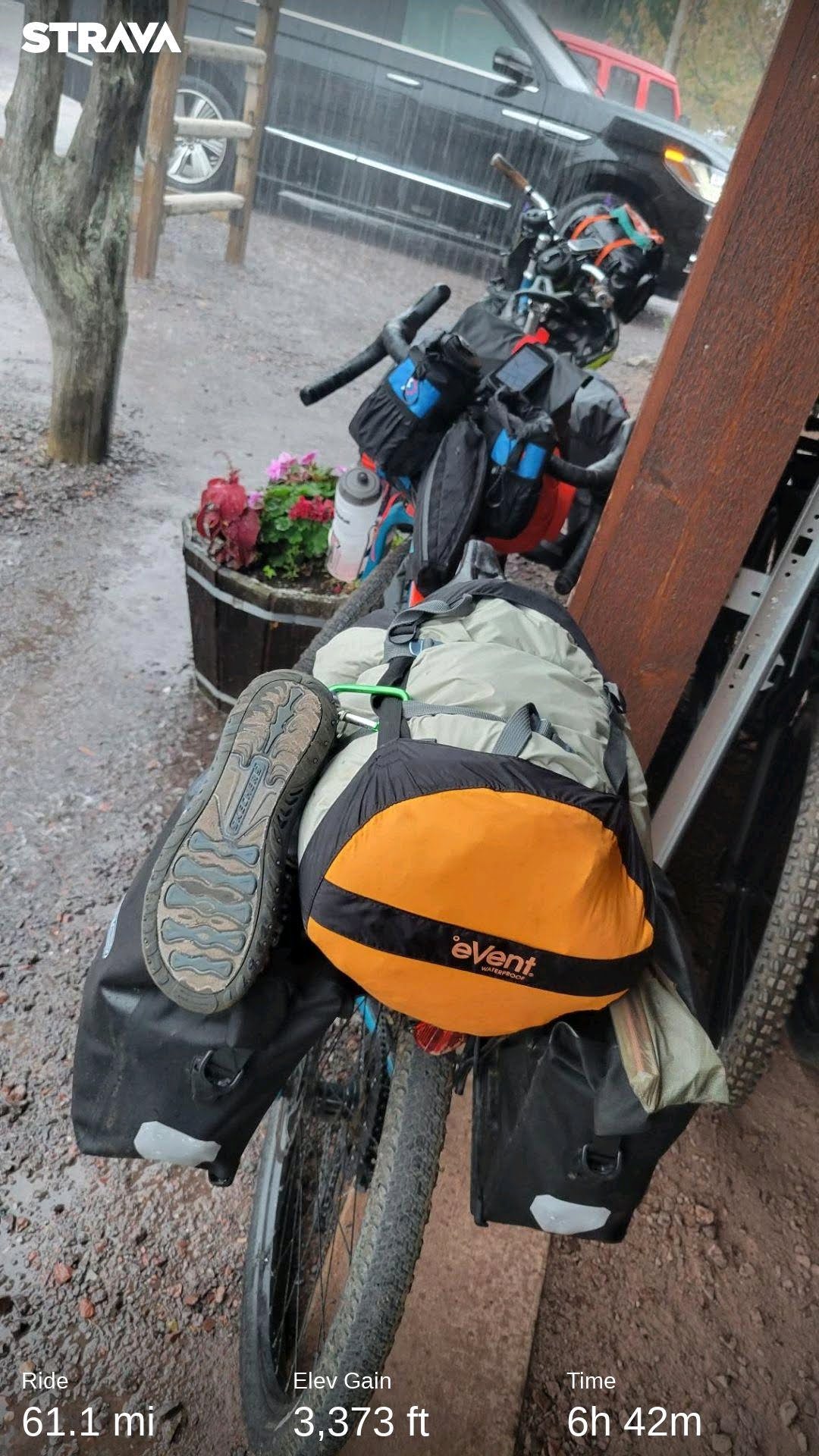
With a few days and nights of rain, it was important to know if our gear was waterproof or water-resistant. Jess had awesome panniers with so many exterior mesh pockets – she was able to carry a lot more on-the-fly items than I was. But they were water-resistant, which meant additional packing of key items into waterproof containers (ZipLocks, drybags, etc). I had my Ortlieb front rollers (12L each), which are waterproof, but also had to have an extra-large Sea to Summit eVent compression bag (waterproof) to house my soft goods that needed to stay dry.
We also brought a spare small drybag to use as a pack-out container. We also brought a roll of small compostable garbage bags to use at camp and then packed the garbage bags into the drybag, attaching it to the rear rack until we found a garbage bin.
Oh – and camp toilet paper. We had a few campgrounds where the vault toilet did not feature toilet paper. Having our own was clutch.
Finally – skin care. Yes, that sounds super Extra – but the reality is, if we didn’t care for our faces, the trip would have been miserable. Between heat rash and cystic acne, it’s easier to bring witch hazel and facial cleanser wipes than it is to deal with the aftermath of not taking care of our skin. This is in addition to the body wipes and chamois creams we brought. And sunscreen and bug spray.
Jess also brought her Kindle and probably would say that was a super solid choice to bring.
Fueling Strategies
An epic adventure is not the place to underfuel. Both Jess and I worked with registered dieticians to dial in a framework for how to fuel day after day. We didn’t have “numbers to hit” but discussed real foods that support adequate protein, fat, and carbohydrate needs above and beyond everyday nutrition. It doesn’t have to be perfect – but you do need to eat consistently to ensure your body has enough fuel to cover the last hour or so of the journey.
We started our first sports nutrition bar within 60-90 min after starting the day and stopping every 5-10 miles to eat and drink. Lunch was planned for just after the half-way mark.
It’s also important to know your body’s signals that it needs more or is getting enough. The second day in Wisconsin I started out a bit too fast and by lunch, I knew I wasn’t eating enough of what my body needed. When we got to camp, I set everything up and then relaxed while eating salted nuts and Skittles until dinner, which was the highest-calorie meal in my bag. After dinner I felt much better and was able to get a good night’s sleep for the next day’s ride.
Part of our planning was to assess how many nights we would have access to services in a town vs where we would need to have everything we needed at camp (and for how long).
Breakfast consisted mostly of oatmeal, trail mix, and nut butters. I went a little bougie and brought a small can of Starbucks Premium Instant Coffee. This was a brilliant selection as we both had ample coffee for the entire trip. I prefer sugar and cream in my coffee so I packed sugar packets and non-dairy creamer packets into a tiny ziplock with a 1 tsp measuring spoon.
Lunch was often on the side of the road and more often than not, we ate Bumblebee Snack on the Run! Chicken Salad kits and supplemented with chips, sports nutrition bars, and caffeinated beverages (Cokes, Red Bull). The kits were super lightweight, easy to eat on the side of the road, shelf-stable, and delicious.
lunch almost every day – we packed out the trash in the small green bag
Other options were typical gas station fare – hard-boiled eggs, cheese sticks, salty potato chips, full sugar ice teas, peanut butter sandwich crackers, trailmiz bars, granola bars, Skittles and Snickers bars. And pickles.
Dinners were dehydrated backpacking meals. The ease of just needing to boil water to have a satisfying meal at the end of the day is most welcome after a long day. There are a lot of brands out there, but we used Packit Gourmet, Wild Zora, Farm to Summit, and Good To Go with the last four days being Mountain House Adventure Meals (as this is what is available at Walmart). We carried 6 dinners to get us through the first 8 days of riding as we knew 2 of those days could be a restaurant meal.
100%, Jess and I did not jump into this trip without building up our fitness and capacity for multiple days of riding with a full load. Even with being careful in what we brought (and I’m sure many ultralight bikepackers would be appalled at the amount of stuff we brought), we had about 40 pounds of gear and supplies loaded to our bikes every day.
Most of our training consisted of just riding – getting out as often as possible.
After Mid South, I put my smart trainer in a closet and forgot about it for a few months. I focused on riding for fun with friends and not worrying too much about speed or power. It was everything I needed it to be. But come June, I knew I needed to start working on building real capacity and pulled the smart trainer back out.
I set up my Trainer Road training plan for a stage race, because Riding Consecutive Days. I didn’t follow it as strictly as I had for Mid South as I could still get out at least one day on the weekend – but this summer has been pretty wet and it was nice to have an indoor option instead of forcing myself into the rain.
I’m sure some would say I needed to train for riding in the rain, but I’ve done enough of that, thanks.
I also put my 2.2″ tires on my Cutthroat so I could get accustomed to riding them. They always feel so plush until the road tips upward – then it’s just extra rubber to push. But I quickly became acclimated to the extra effort and saw an increase in my FTP when I tested it – so it must have helped
Jess did outdoor rides, loaded, that would simulate our longest days. That was an excellent idea as well.
Mental Preparation
The last topic is mentally preparing for the journey. Not just in planning optimally, but also considering back up plans and alternate routes (and when you would have to make a decision about said alternate route). Having this in your back pocket makes heading out easier because you know you have options.
I’ll be honest that when I thought about the entire trip, I would have a mini panic attack. what are we thinking? can we even do this? But when we thought or talked about a section – one state, one day – we felt calm and confident in our planning.
The takeaway here is – break your big trip into smaller, manageable sections. Think about each section when you are experiencing it. Don’t worry about the next section – you just need to get to the next campsite to be successful.
Once we were on Isle Royale, the trip didn’t feel so big and we could think about more than just the next day in front of us. We had just completed 1/3 of the trip!
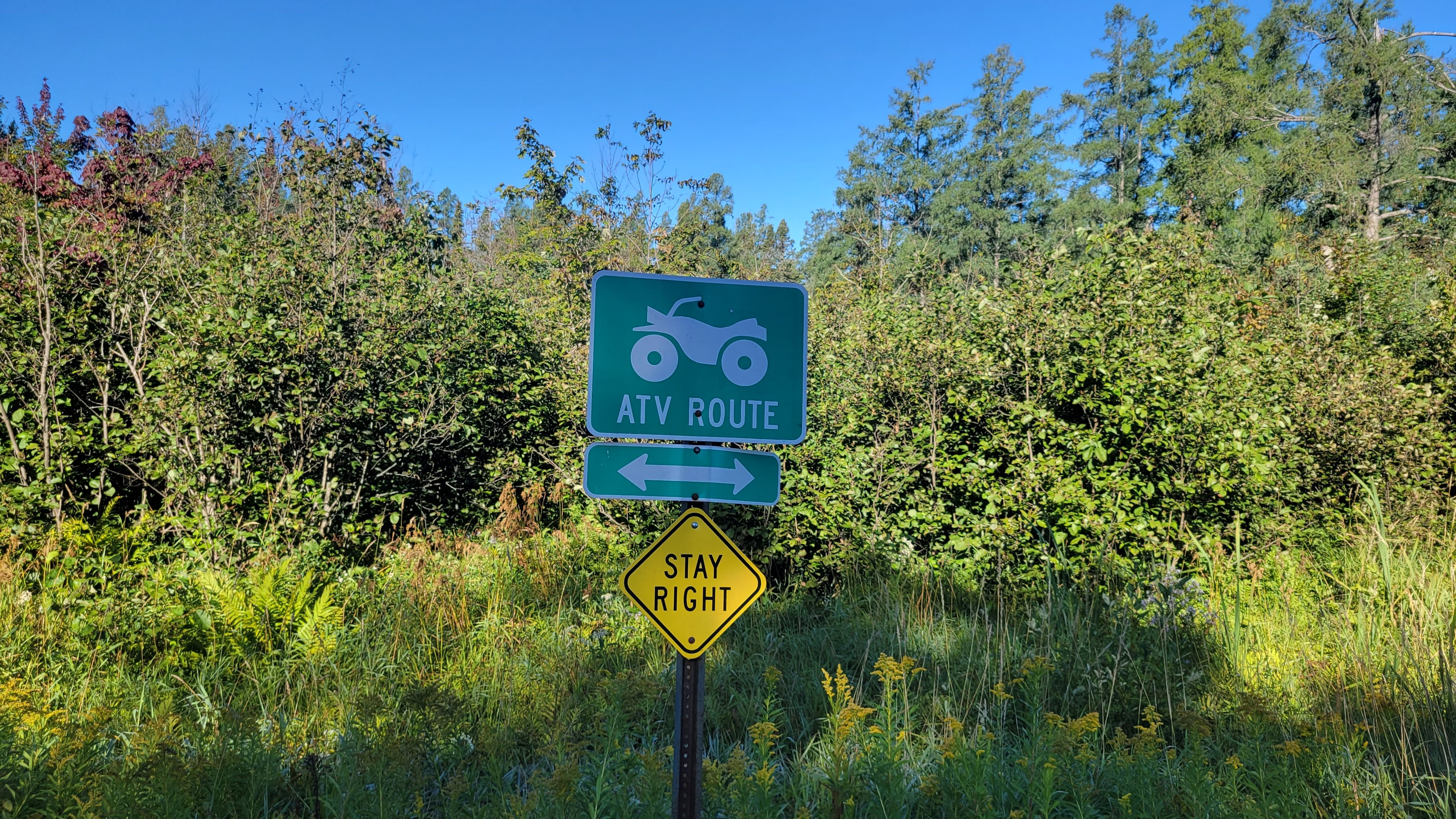
We also started thinking in terms of how many more nights of camping in that state to mark passage of time. The longer we were out, the less relevant the day of the week or day of the month it was – especially since we had prebooked all our accommodations. The only times we saw others was either in town or on weekends (lots of ATVers enjoying the trails).
Final Thoughts
With exactly one multi-week adventure under our belts, I feel more confident in planning other multi-day/week trips – and confident that with the right planning and training, these types of trips are accessible to those willing to put in the effort. I’m sure over time we will refine and dial in the stuff we bring (or not bring) and maybe even experiment with not pre-booking our sites to have more flexibility – but at this point, that’s the level of planning we feel comfortable with.
I’m already starting to think about what amazing adventures 2024 will hold.
I’m still basking in the incredible sense of accomplishment and pride in completing the Northwoods 600 – a 600+ mile bikepacking route that circumnavigates the western portion of Lake Superior through Minnesota, Michigan, and Wisconsin. It was nothing short of an epic journey and a test of mental and physical grit.
The Northwoods 600 was created by Bikepacking Roots, a non-profit dedicated to promoting responsible bikepacking and welcoming bikepackers of all races, genders, sexual orientations, and abilities. The route showcases the stunning, rugged beauty of the Northwoods and Michigan’s Upper Peninsula and traverses the traditional lands of the Anishinabewaki people.
Buckle up – this is a long post!
Prologue
Shortly after my friend Jess and I completed the Green Mountain Gravel Growler in Vermont, we started thinking about the Northwoods 600. The original plan was to look at 2022 but the timing didn’t work out so we shifted the plan to 2023. We settled on the last two weeks of August to capitalize on the long Labor Day weekend, cooling temps, and hopefully, fewer bugs. We decided camping would keep costs low and give us more flexibility given some sections were in very remote areas.
Over about 9 months, we collaborated on planning in a Google Sheet – breaking the states down into reasonable mileage days, mapping out campgrounds and resupply locations, and other interesting things to look for. We donated to Bikepacking Roots to get the physical guidebook and the PDF version, which we brought with us on the trip for on-the-fly information gathering.
To be sure, this 2- week adventure was out of our collective comfort zones. Neither of us has done a bikepacking trip of this length, much less with most of the accomodations as camping. Camping adds a layer of stress above the usual miles and load – survival is at stake. Setting up camp, making a meal, cleaning up after the meal, making sure everything is bear proof/bear safe … it’s a lot of psychological stress.
I assumed we would be without cell coverage for at least part of the route, but there were a surprising amount of times I didn’t have cell service. I picked up a Garmin Messenger tracking device, which was really helpful in letting friends and family see where we were, we could message them through the device to let them know we were OK, and even get weather forecasts.
Two weeks before our scheduled departure, my youngest adult-aged kid, who lives at home, contacted Covid, which, fortunately, my husband and I did not contract (she isolated in her room and had her own bathroom) but made for a bit of anxiety around how quickly illness could change all our planning. It might have been overkill, but I rapid-tested daily until departure day to be sure.
I made a playlist of the songs that ran through my head over the course of the 2 weeks, in order of the days. Most of these were used as names for my Strava uploads. Mental music helps the miles tick off faster whe we weren’t talking.
Minnesota (Days 1-4)
While Duluth has a regional airport, it was cheaper to fly into Minneapolis/St Paul and rent a car to drive north. We had timed our flights to arrive within an hour of each other, but ultimately my flight was delayed 4 hours – which wasn’t a great way to start the trip but was a bellwether for things to come.
The next morning we had to get our bike bags and suitcases stored. We had arranged with the local bike shop, Twin Ports Cyclery, so we walked our bike bags up to the shop (Denis, the owner, was there and had spent time living in Colorado Springs, which we all bonded over) and then walked to Whole Foods Co-Op to pick up last minute snacks and lunch. All this meant we got a much later start than intended. And …. it was hot.
walking our bike boxes to the bike shopthis shop rocksme, Jess, and Denis the owner
In the late morning, we set our way through Duluth on the Cross-City Trail, which led us to the heavily populated Canal Park. The bike path was lovely other than the multi-use path over I-35, which was absolutely terrifying to ride across.
It’s scary because you can see all the way down to the speeding traffic
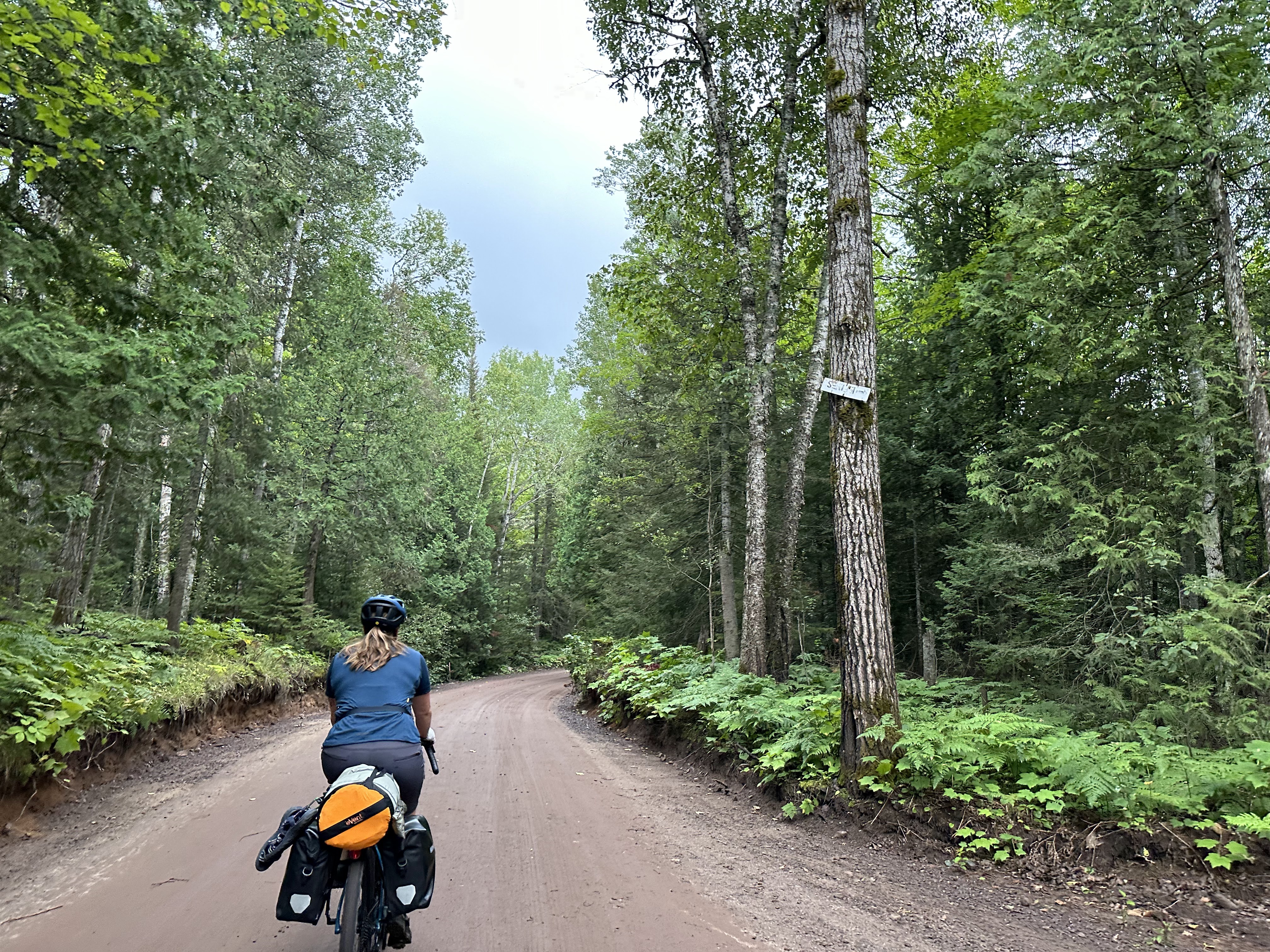
Then we began to climb out of the Duluth area and the ride started to feel real. The roads were fairly exposed with little tree cover, so we stopped a few times to cool off, drink water, and eat snacks. The climbs overall were never onerous – relatively nice 2-3% grades for no more than a few miles – but when hauling 40 pounds of gear on your bike, it is more of a marathon than a sprint.
highlights from Minnesota
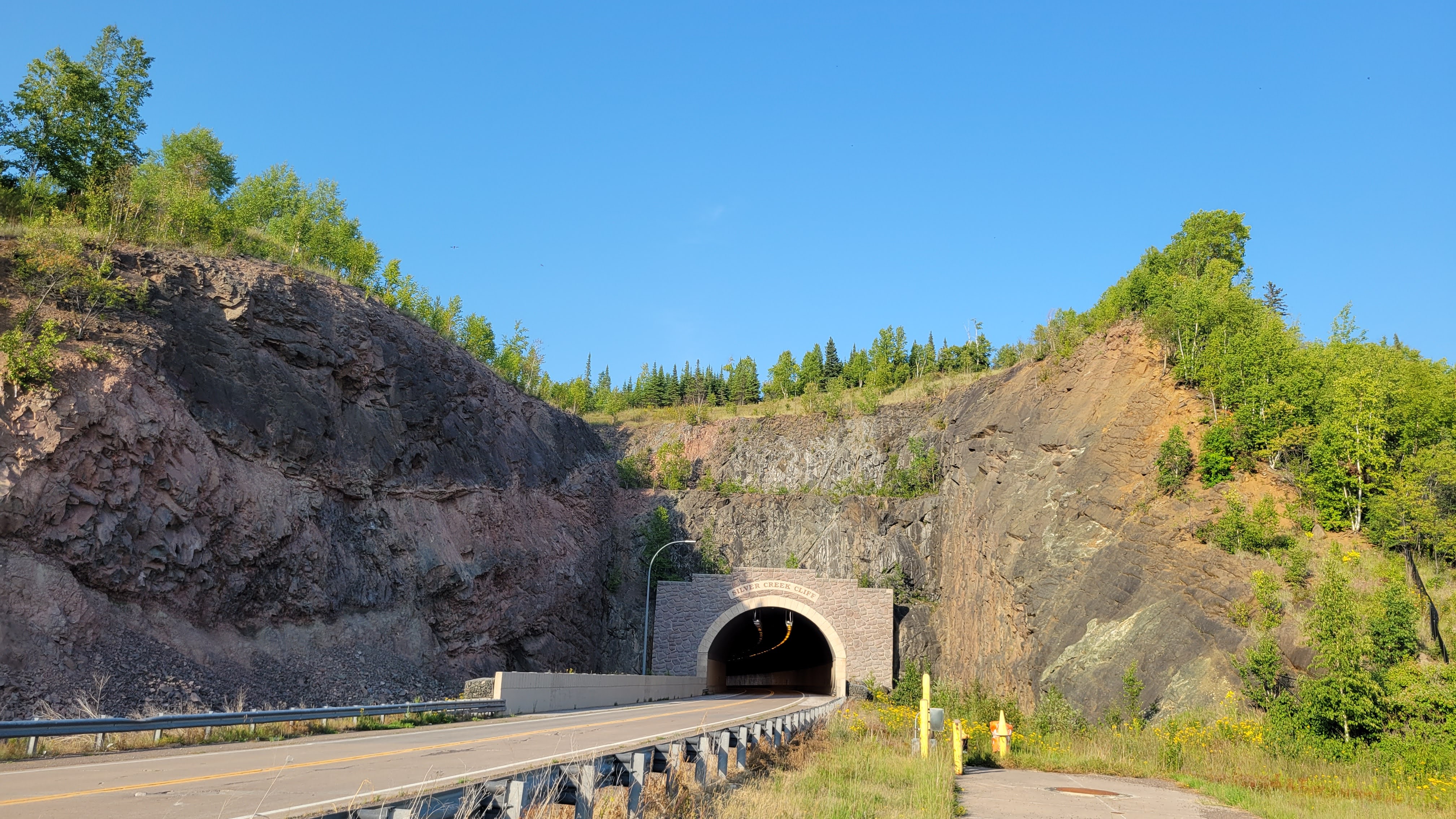
eating in the shadedidn’t expect exposed roadswhen you forget your beanie, you get one at the gas stationSilver Mine Cliffs TunnelOH HELL YEAHWOO!time to find a place to camp for the night
Exposed Roads that made the heat of the first two days tough. Lots of taking breaks in the shade to cool off, drink fluids, and have a snack
Routing into Two Harbors for food and more water, as we’d already drank the gallon each we were carrying
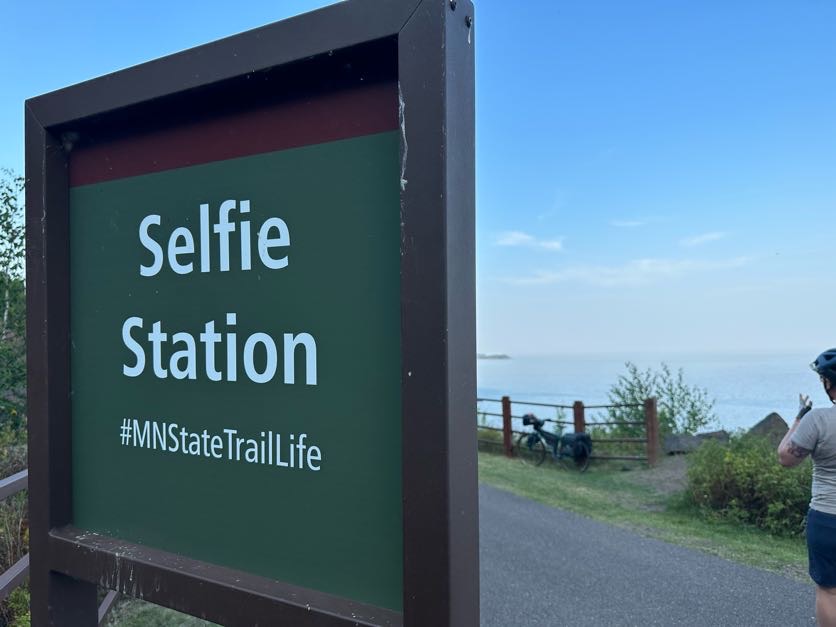
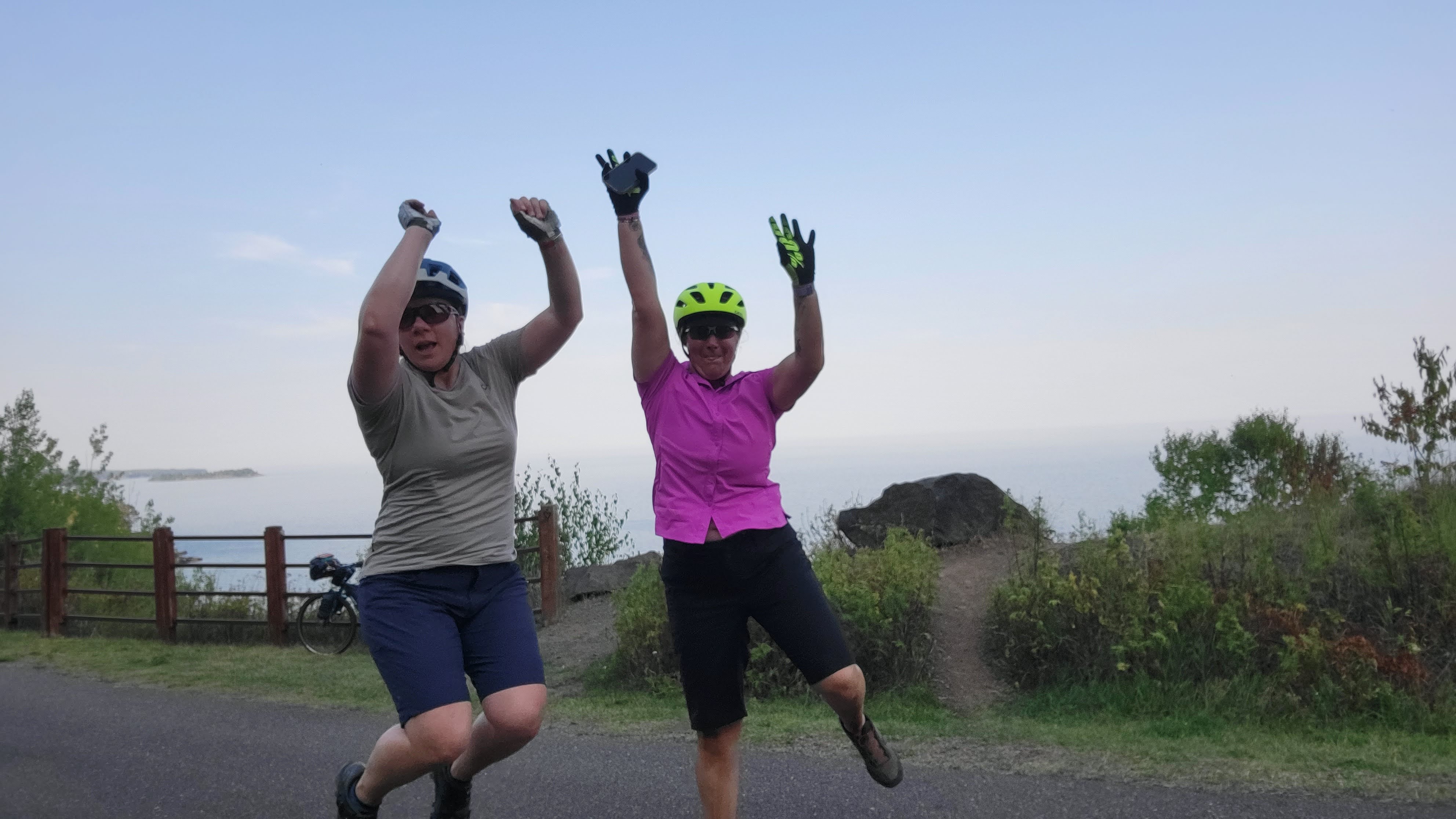
Finding a selfie station on a trail around a tunnel, and of course we had to take a jumping picture. It took several tries to get it right.
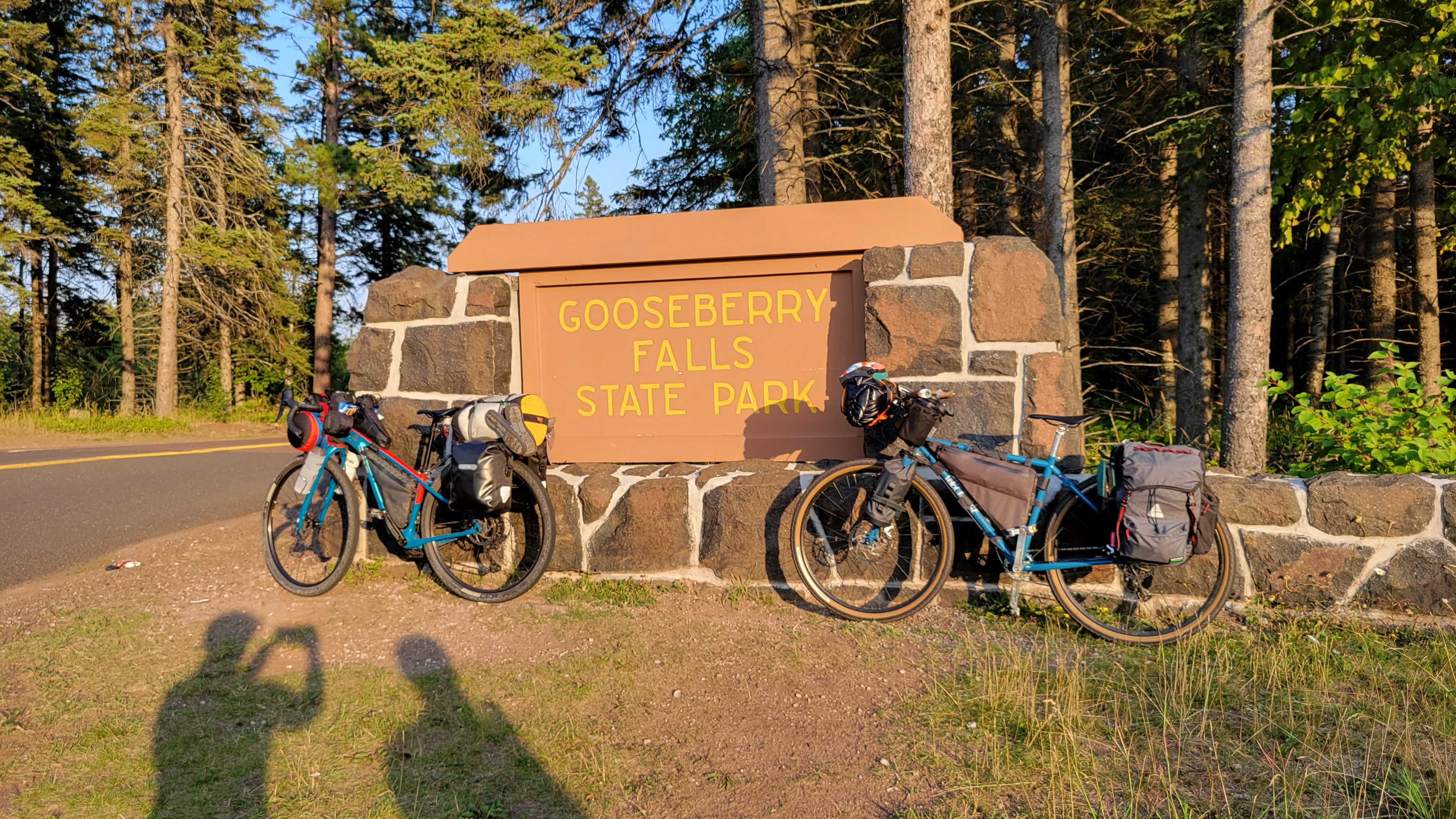
Rolling into Gooseberry Falls State Park 7 minutes before the ranger station closed and scoring the only available place to put us, which happened to be the best spot in the campground. (Minnesota, Michigan, and Wisconsin have a No Turn Away policy for bicycle travelers who need accommodations at campgrounds even if they are full.)
I break one of my tent poles. Thankfully, Big Agnes includes a pole splint.
sunrise over our campsite – Lake Superior in the background
the Gitchi-Gami Trail is a GEM of a paved bikepath from Gooseberry Falls to Silver Bay
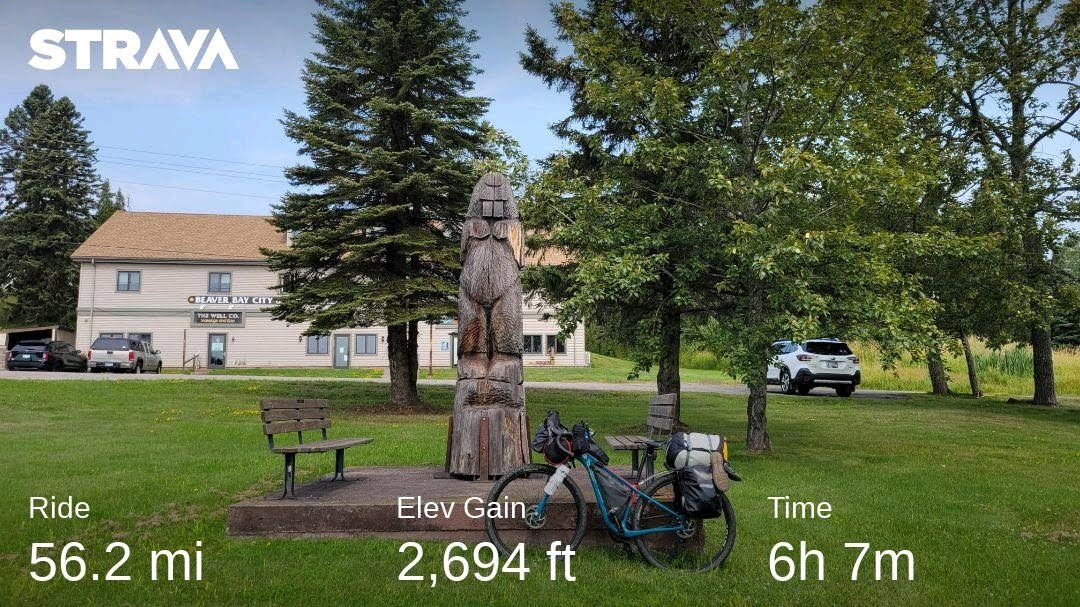
Stopping in Beaver Bay for snacks and more water, relaxing in the shade by a giant beaver statue
More exposed paved roads = so hot
Stopping a few feet into a driveway to rest, eat, and drink in a small spot of shade. A little old woman comes out of her house – we think she will offer us water or some other comfort in the heat – but she yells “PICK UP YOUR SHIT AND MOVE ALONG.”
Stopping a mile or so later at the Lax Lake Resort to rest in their driveway and chat with the proprietors, who assured us that woman was like that to everyone
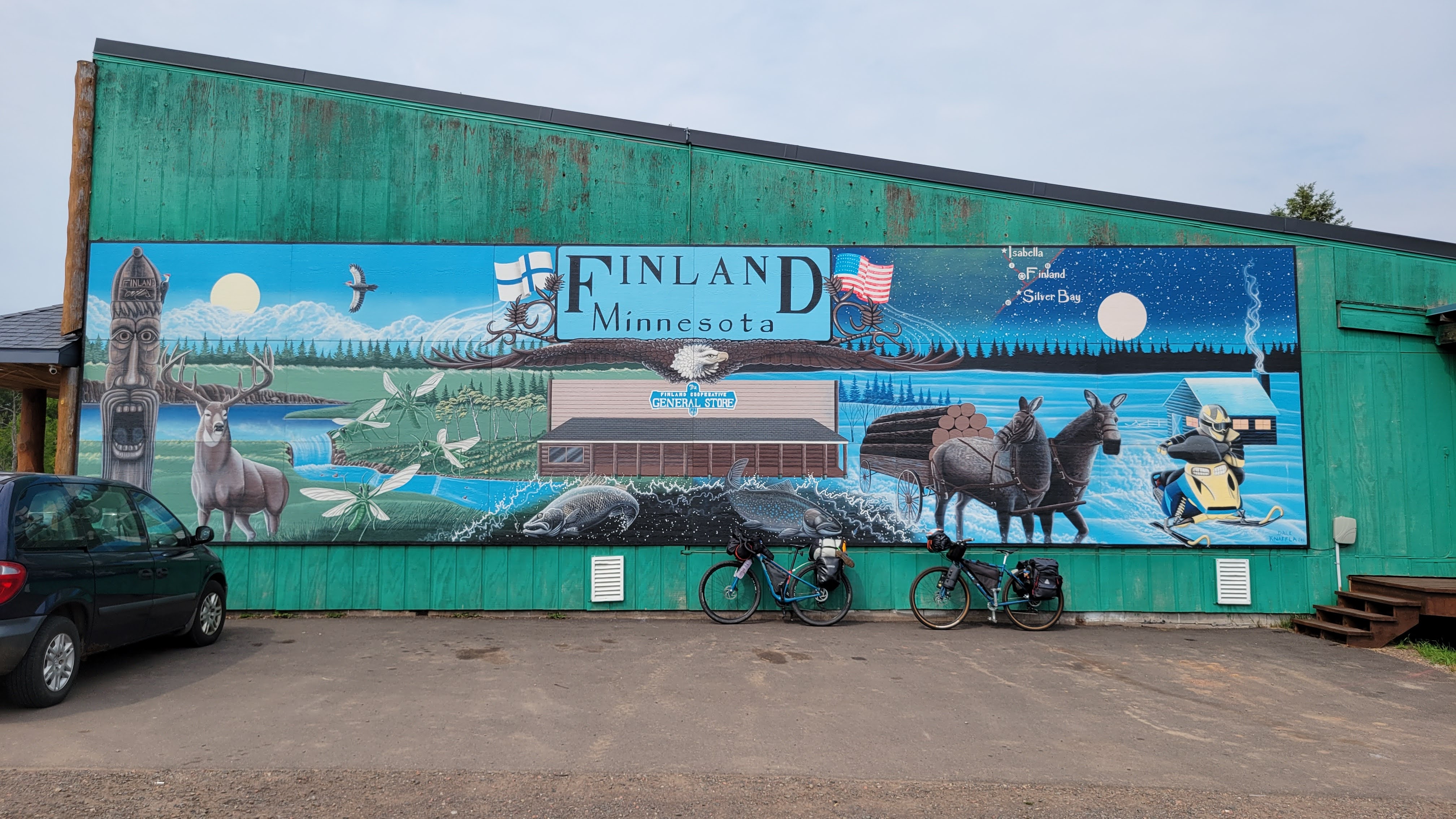
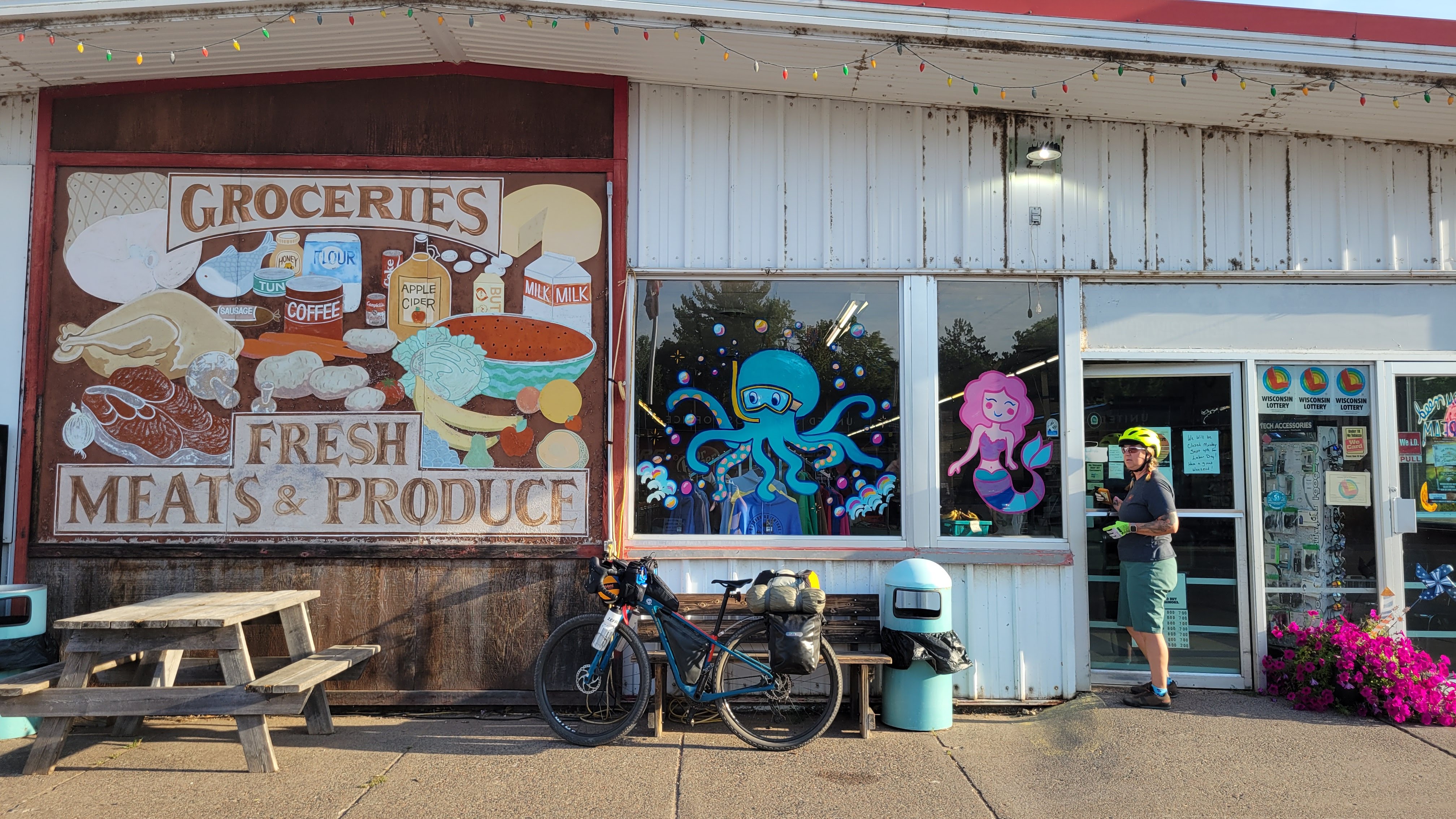
Getting to Finland, MN and buying a lot of food because it was our last resupply for 70 miles (we were still 30 miles from our intended campsite)
watching a beaver play in a pond full of lily pads
getting the last open campsite!!
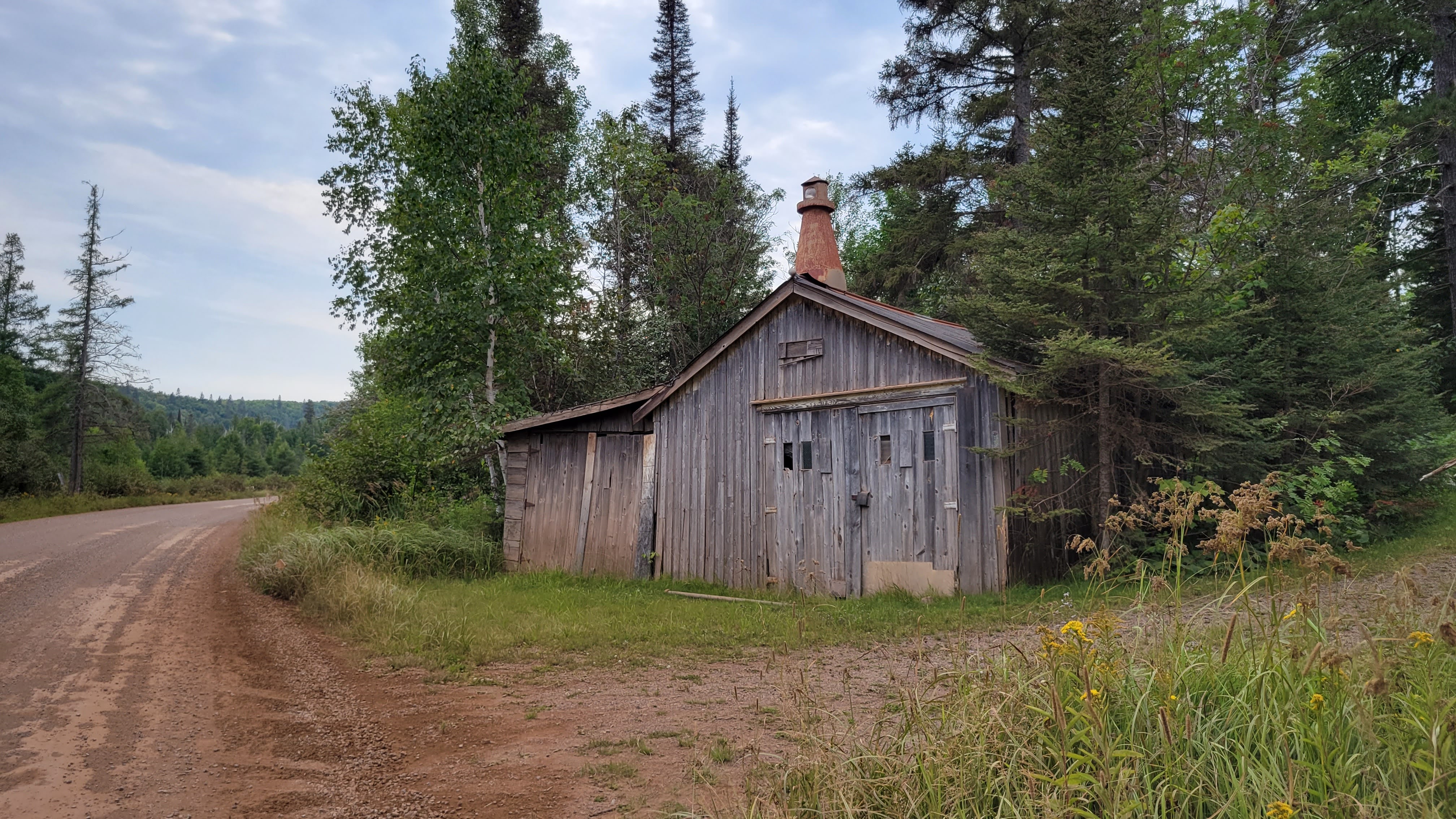
Gitchi-Gami TrailBeaver Bay, Pop 120long lonesome roadsneat raodside stuffFinland, our final resupply for 70 milestaking pics while ridingthis is what I took a pic ofbeaver! rusticmore long, lonesome roadsLast campsite available!!the lake near camp
RAIN overnight. The first of a few days where temps were getting cooler and every night was soggy. Fortunately, our tents kept us warm and dry; although I realized I had neglected to re-waterproof my rainfly before the trip.
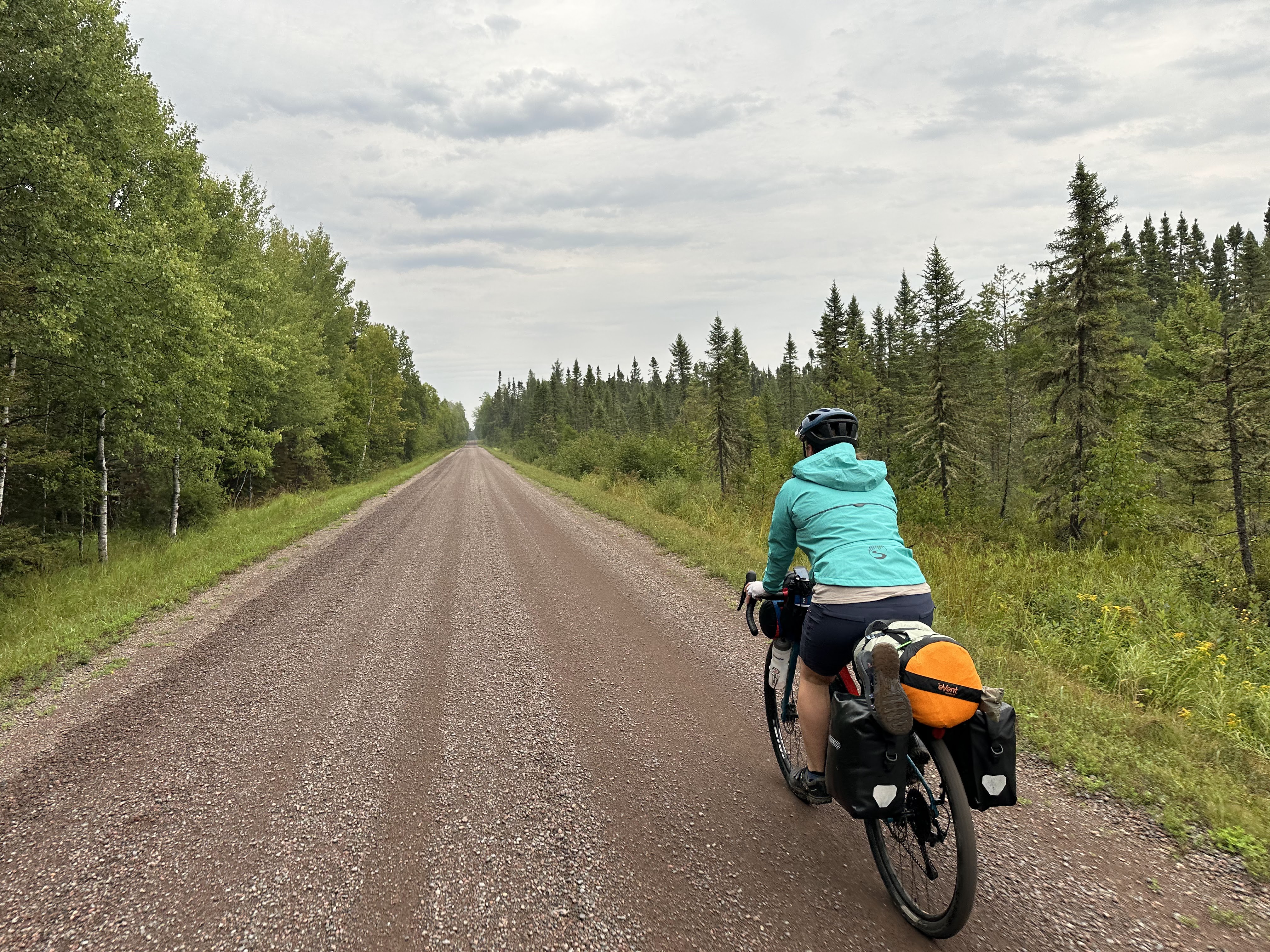
Roads are two-tracks and trails are roads. It didn’t make sense. Regardless, there were a ton of mosquitos. BUGGINS Performance insect repellent kept them at bay (mostly)
Shorter day but no resupply until we get to Grand Marais for the night
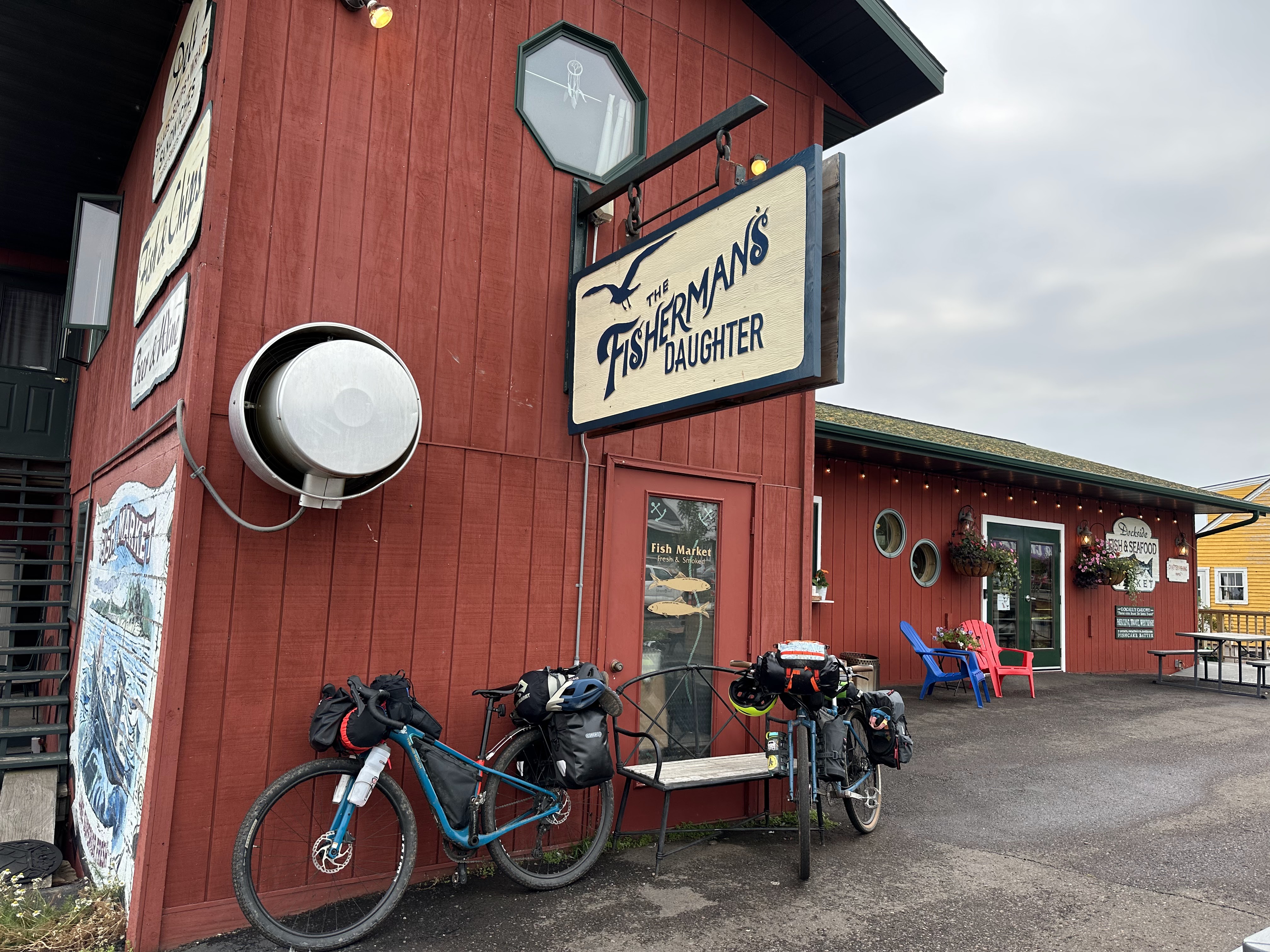
OK lunch at Fisherman’s Daughter, then off to our campsite, dinner at Voyageur Brewery
cooler temps and rainrice lake road is a trailwith big puddlesCaribou Trail is a roadJess looking bad asslunch!camp for the night
RAIN AGAIN. The forecast looked super gloomy with severe weather overnight. We opt to have breakfast in town (Java Moose), and skip the “most remote and rustic” part of Minnesota to ride up the coast on MN61.
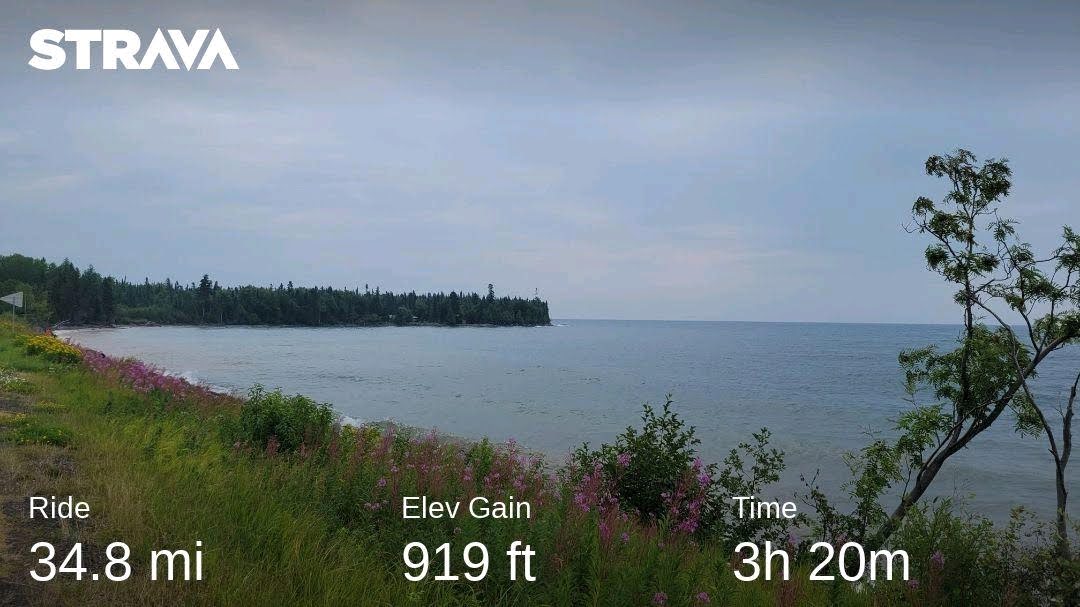
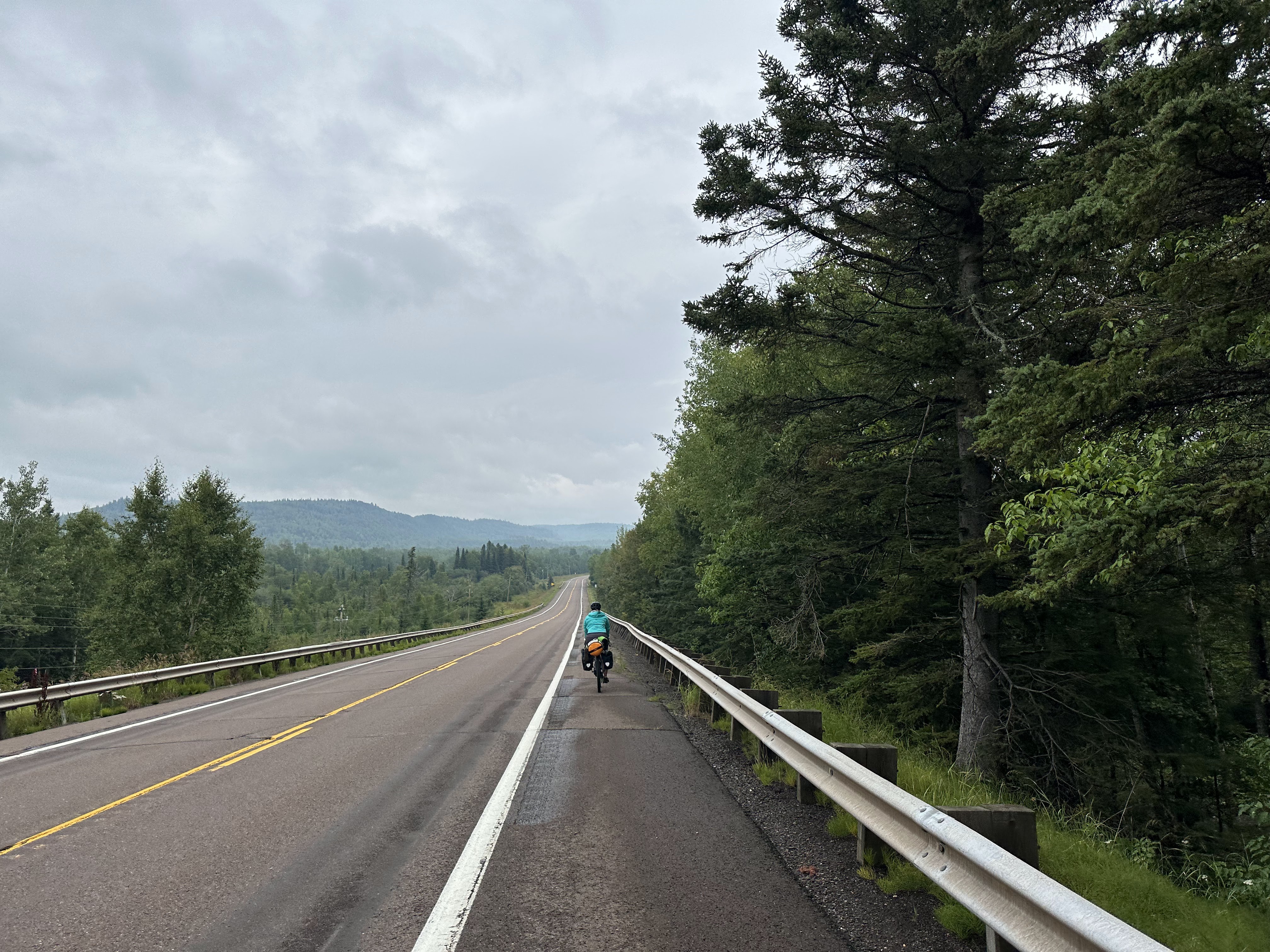
Wonderful views of Lake Superior as we ride on the wide shoulder
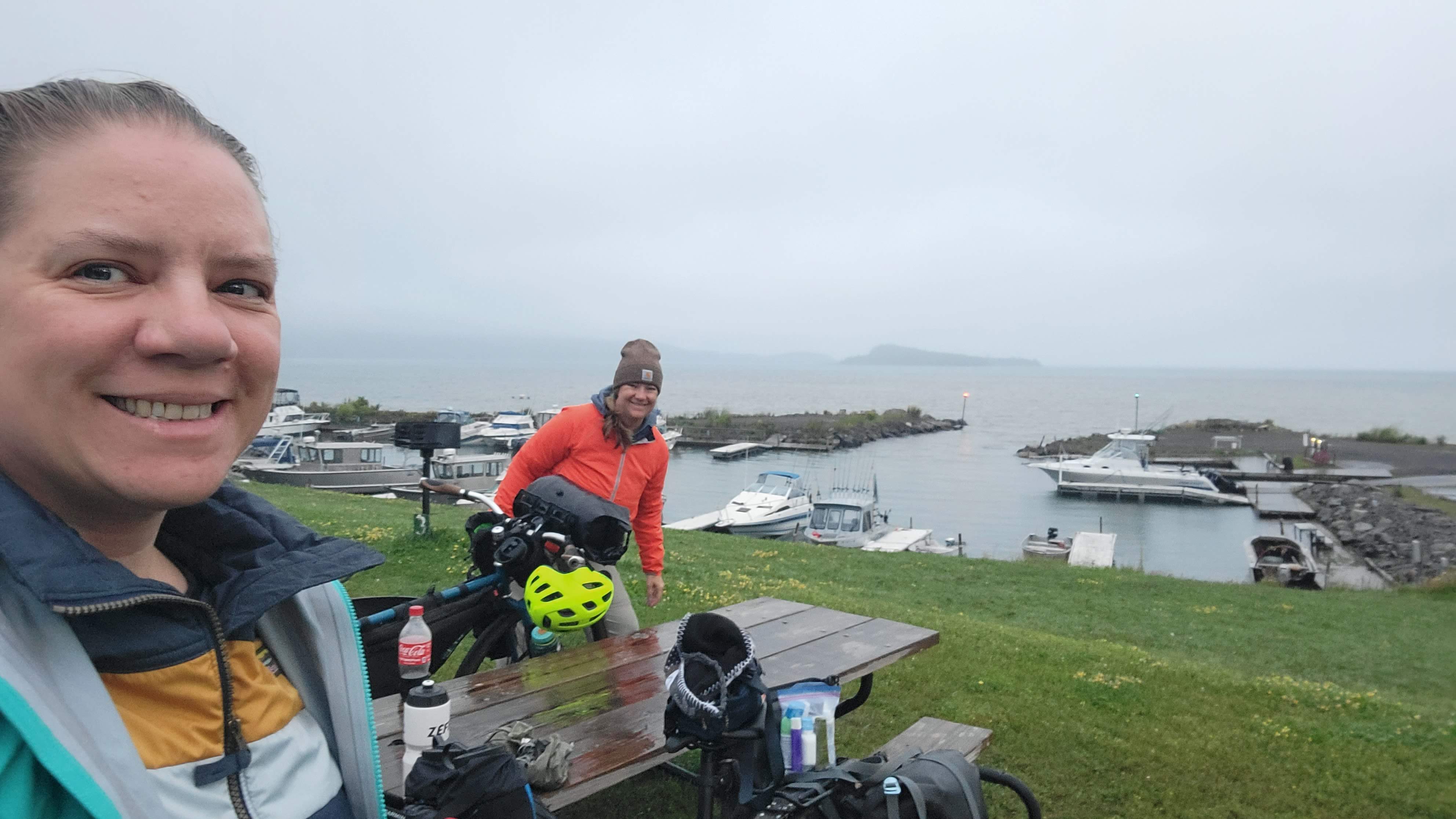
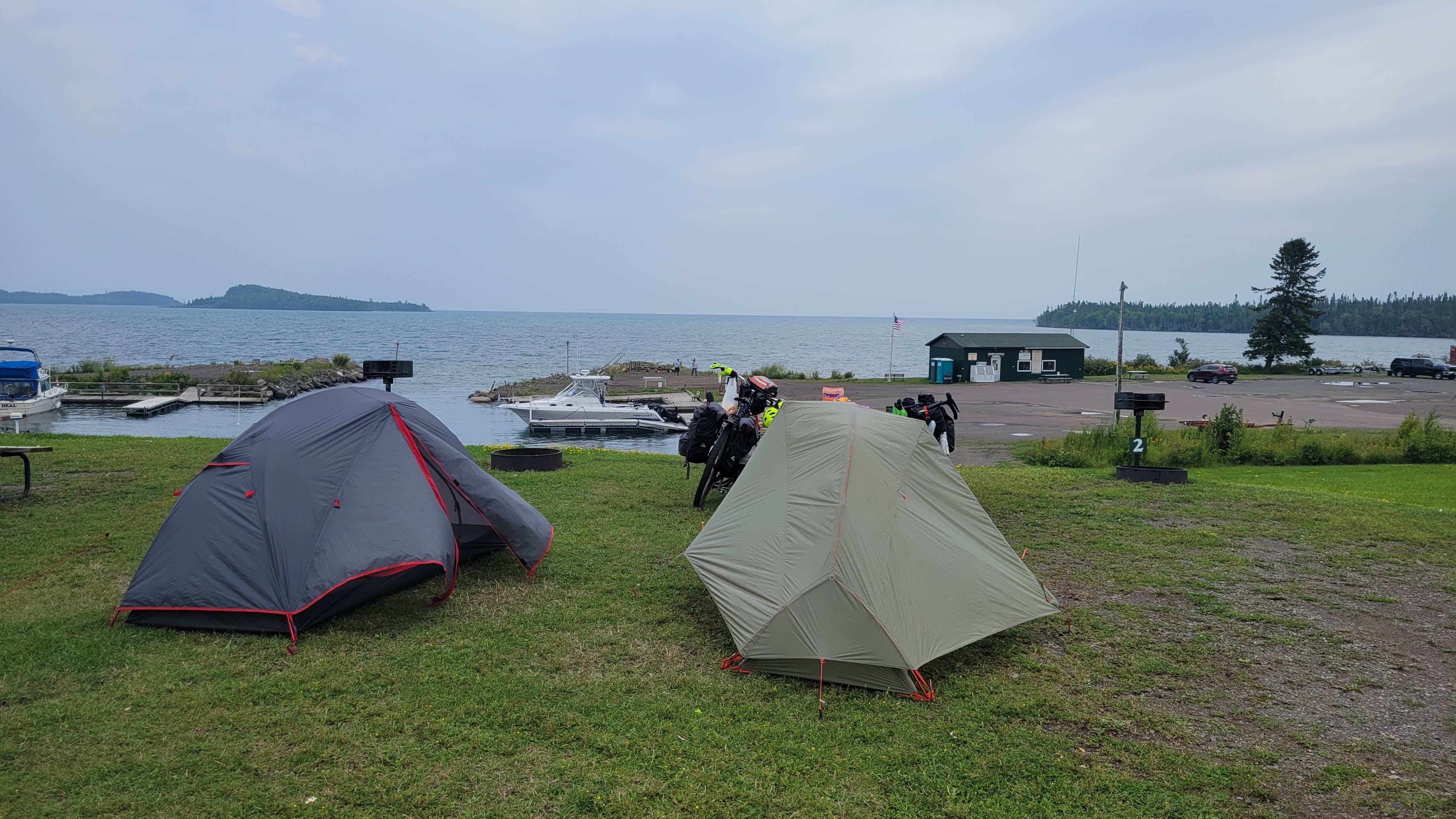
Setting up camp at the Grand Portage Marina, which feels like the edge of the world, especially with the strong winds coming off the bay
Someone giving us fish caught earlier in the day. They didn’t know we don’t eat fish, especially from strangers. We ate in the casino restaurant instead.
No severe weather overnight, but the WIND was so intense
still smilingdamp dayscenery is UNREALheading into the reservationgetting supplies at the Trading Postsetting up camp in the windfeels like the edge of the world
Isle Royale National Park (Days 5-6)
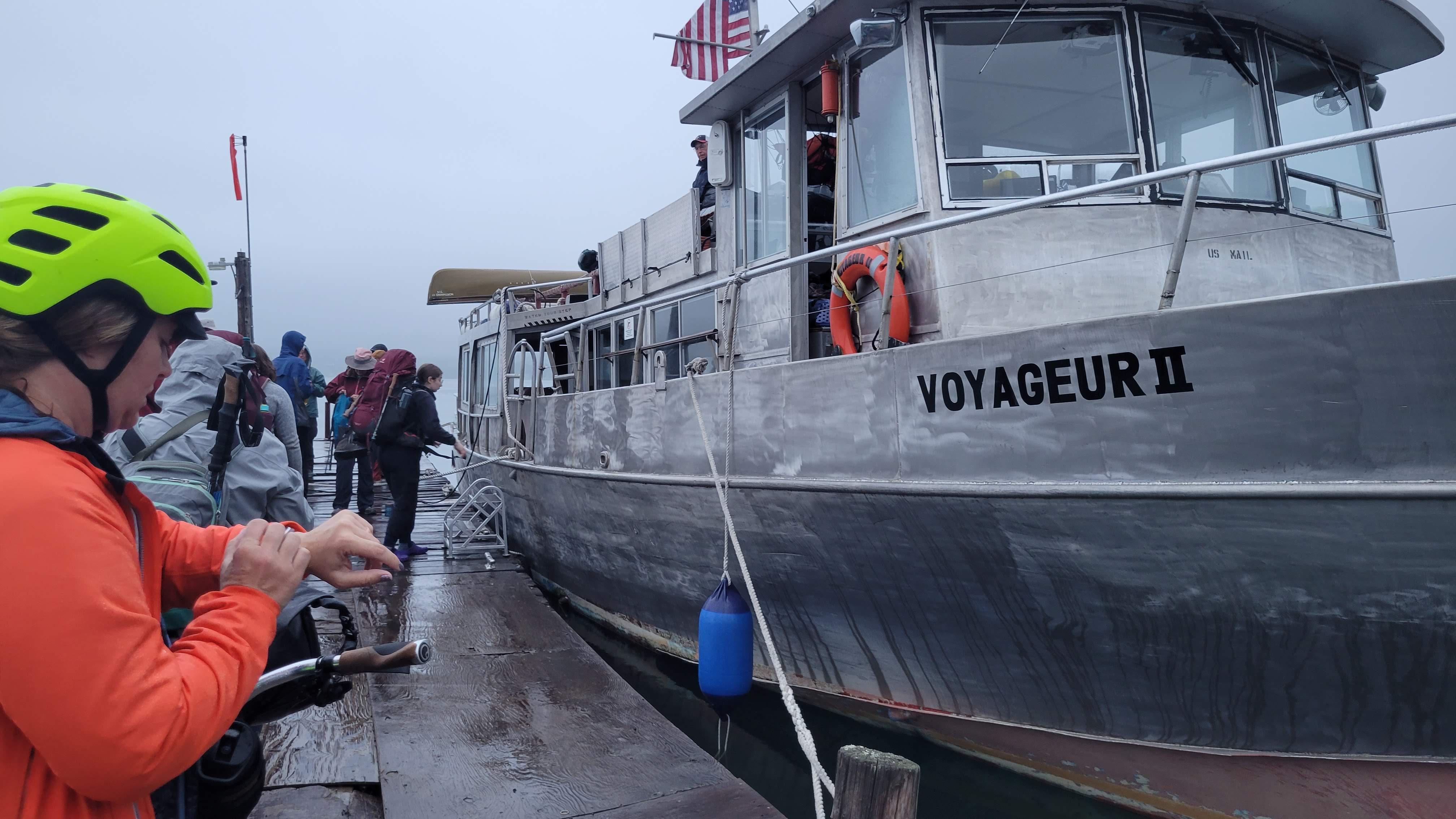
Early the next morning, we packed up our stuff and rode over to the ferry to Isle Royale National Park. We booked our spots on the Voyageur II, a US Mail Boat specifically designed for operation on the Great Lakes. We pre-gamed with Dramamine because the weather has been so iffy.
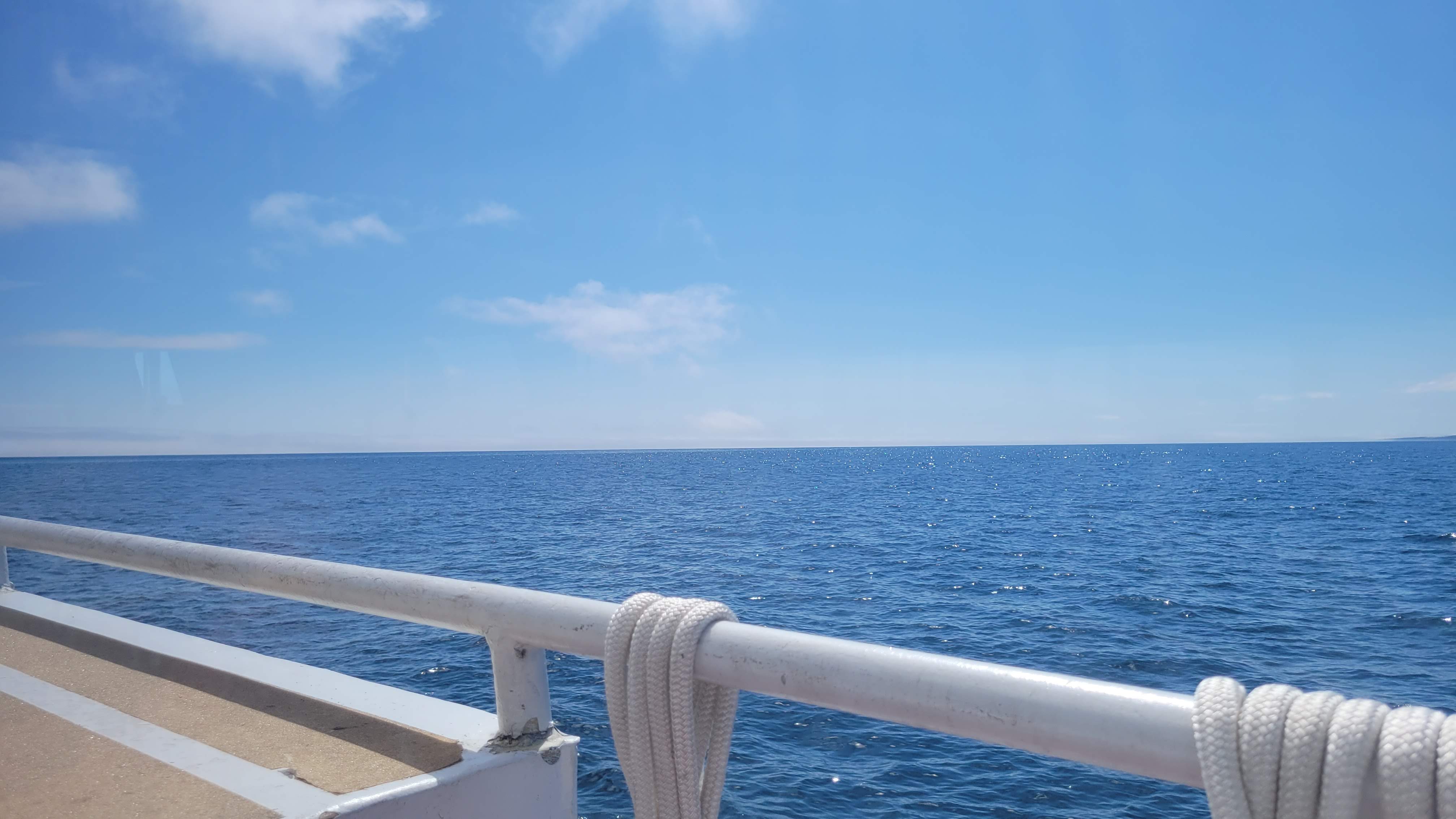
Sure enough, Lake Superior was in a fine mood and we both felt nauseated despite the anti-motion sickenss meds. A steady stream of Gin Gin hard candies kept things down for us (but others were “feeding the fishes” off the back). Two hours later, we pull into Windigo dock for our park orientation.
Our boatour bikes were hoisted and strapped down on the roofLake Superior MoodWindigo Dock
Back on the boat for the 6 hour trip around the island to Rock Harbor, where we would be staying overnight.
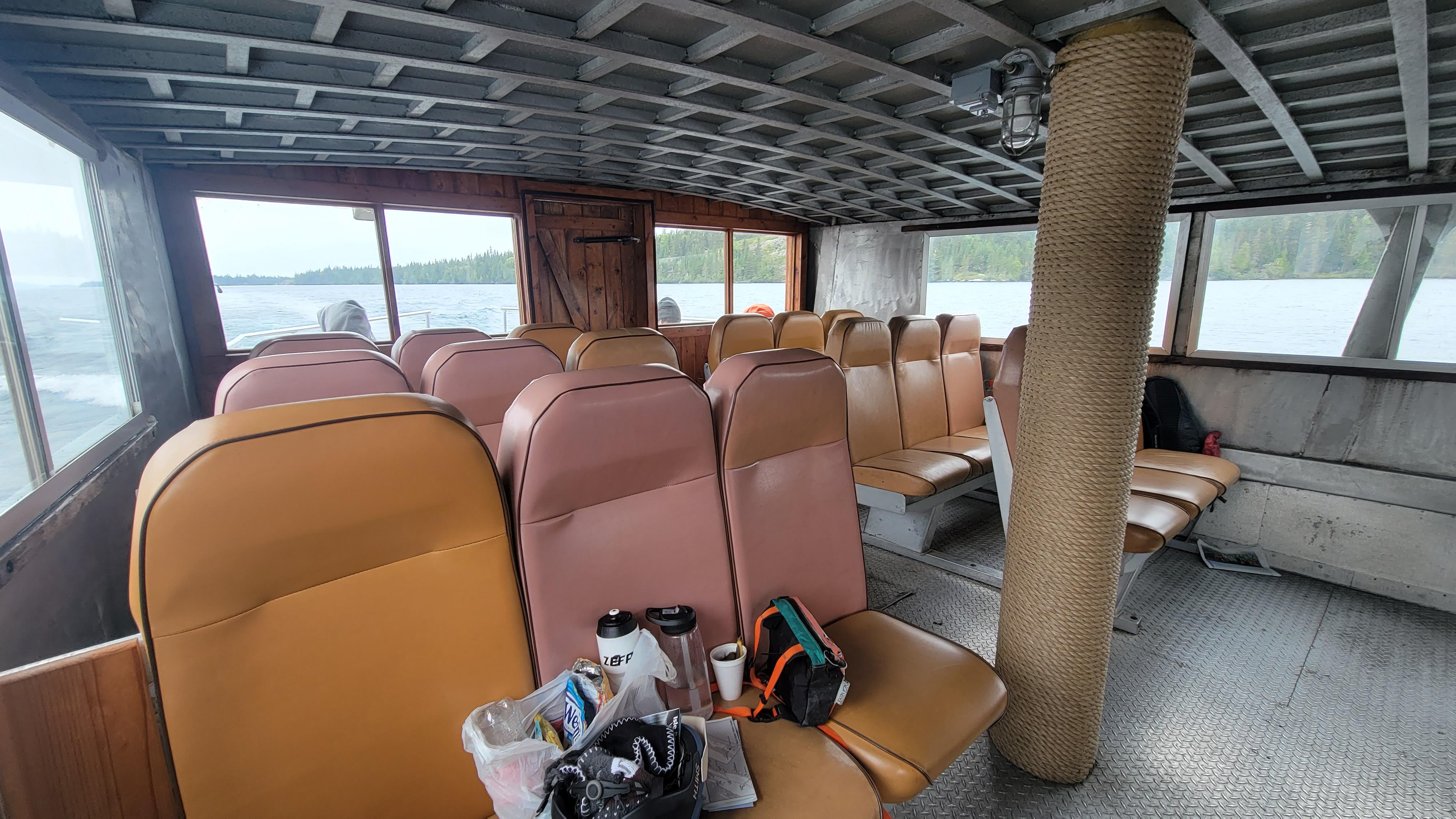
The first 5 hours of this portion were lovely – calm waters as we sailed the smooth water along the western coastline of Isle Royale. We had a pick up at one of the remote docks and sailing in McCargoe Cove was absolutely magical. (Excuse the noise – we were sitting in or directly behind the engine room)
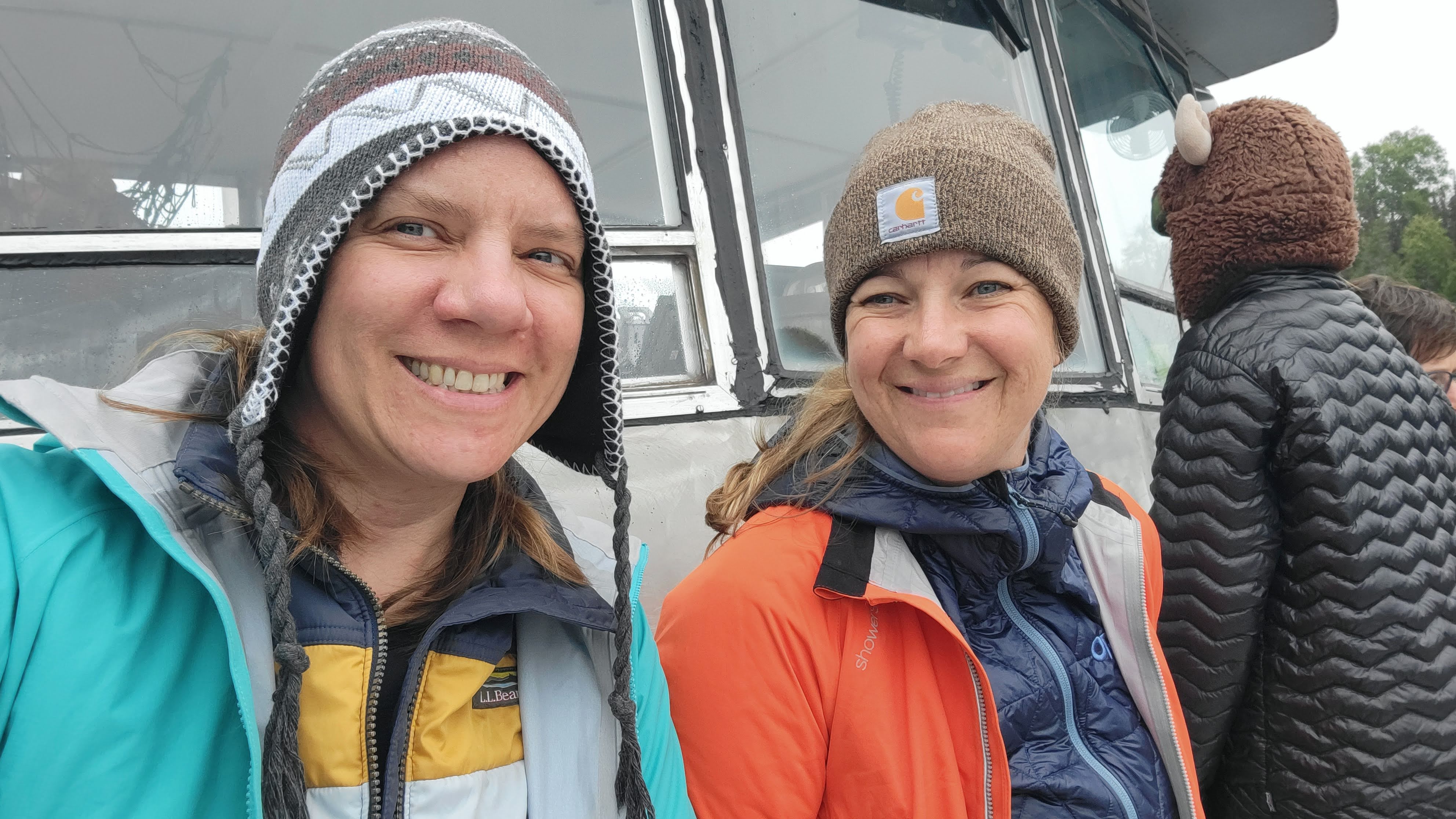
engine room seating in the engine roomJess and I on the bowMcCargoe Cove
As we rounded the northern end of the island, things got … interesting. The waves were getting larger, the boat listing a bit more from side to side. Then the doors to the engine room where we were sitting started banging open and closed. The boat listed so hard at one point it felt like it was at a 45* angle and everyone was bracing themselves against what was surely going to be a rollover.
In that half-second, my brain calculated that there wasn’t enough time to grab life jackets and that our bikes were surely headed to the bottom of the lake.
Fortunately, our captain was All Pro and navigated us safely around the island and into the calm waters of Rock Harbor with a jovial “Well, THAT was fun!” Jess chatted with him as our bikes were being unloaded – he said the 10-foot waves we were in were relatively mild compared to how it can get on Lake Superior. Yikes.
The only words on my mind are RESPECT. Respect for our captain and crew and for the raw power of nature.
We got our camping permit, locked our bikes to the racks at the docks, and walked our bags to a campsite to set up and eat some food before retiring early.
I had to walk back to our bikes to get some items we left and on my way back on the trail to our campsite, I noticed a medium sized black dog with pointy ears trotting towards me. My first thought was “oh, someone’s dog is loose!” – but immediately recalled that dogs are not allowed on the island. This is a fox. I stopped; the black fox stopped to observe me, decided I wasn’t a threat, and trotted off into the brush.
No photos, but it did happen! I felt so lucky!
The next morning we slept in late, as our next ferry wasn’t until afternoon, and we had a relaxed breakfast before packing everything up and reloading our bikes. We wandered around the dock, had lunch on the restaurant porch, bought souvenirs and snacks, and then spent a few hours just looking out over the lake. It was nice to not do anything for a bit. We took a short hike to the America Dock and saw the ferry we would take coming in. It was at least three times as large as our previous ferry, which relieved us that the trip to Michigan would be much smoother.
When it was time for the Queen IV ferry to load our bikes up, the crew was astonished to learn we were carrying a gallon of water each on our bikes. We did – every day. While we had water filters, Minnesota is marshland and we opted to just fill up in the morning and as needed along the way. They made us remove some gear so they could get the bikes up and secured on the roof.
The 3.5 hour ferry to Copper Harbor, Michigan was smooth and uneventful. We chatted with a few couples who had been stranded on Isle Royale for a few days because they had come over on the sea planes, which weren’t flying due to weather/fog. Sea plane visitors are at the mercy of the ferries back to the mainlands having space.
welcome to Rock Harborour campsiteAttn Bikepackers: You gotta leave your bike at the docksQueen IV ferrySittin’ on the dock of the Bay …
Lake Superior Moods
Let’s Talk about Copper Harbor
We landed at the dock and got our bicycles and gear from the ferry. Somehow my fork had been loosened and it wasn’t lining up with my handlebars – but we were only two blocks from our cabin at the Minnetonka Resort for the night so we walked up there, got the keys, and tightened up the fork.
After taking a shower, we decided to walk down to Mariner North to get a pizza and cheese curds.
While waiting for our pizza to be done, a woman walked up to the bar where we were standing and told one of the servers “I can’t figure out how to make my television work.” (the restaurant is also a lodge). The server excused themselves and soon an older man who appeared to be the manager came over. She explained she couldn’t figure out the TV and quipped “This is the strangest place I’ve ever been.” to which he replied, in the most Wisconsin accent ever, “Oh-KEY” You could see his brain working on how to respond to this woman’s issue when he blurted out “Right now. We can do it right now. Right now, or in an hour and a half.” The poor woman was bewildered and agreed to go now to get her TV set up. We left with our pizza and cheese curds laughing the whole walk back to the cabin.
That night as we chatted in the softest, most cloud-like beds ever slept in, we started a list of all the catch phrases so far:
… but did you die on a boat?
Then pick up your shit and move along!
This is the strangest place I’ve ever been – Oh-KEY.
Michigan (Days 7-10)
Copper Harbor is a tiny tourist town at the very tip of the Keweenah Peninsula (which, isn’t actually a peninsula; it’s an island because the canal in Houghton is natural) that is home to some of the best mountain biking trails in the Midwest. It’s also home to an extensive network of ATV trails, which we learned very quickly. Michigan was a tough state, and we adjusted the route almost every day for various reasons (mostly, the ATV roads were rocky and sandy, which sucks energy and speed).
highlights from Michigan
Tightening every bolt on our bikes before leaving town
Climbing out of Copper Harbor on quiet, gorgeous dirt roads
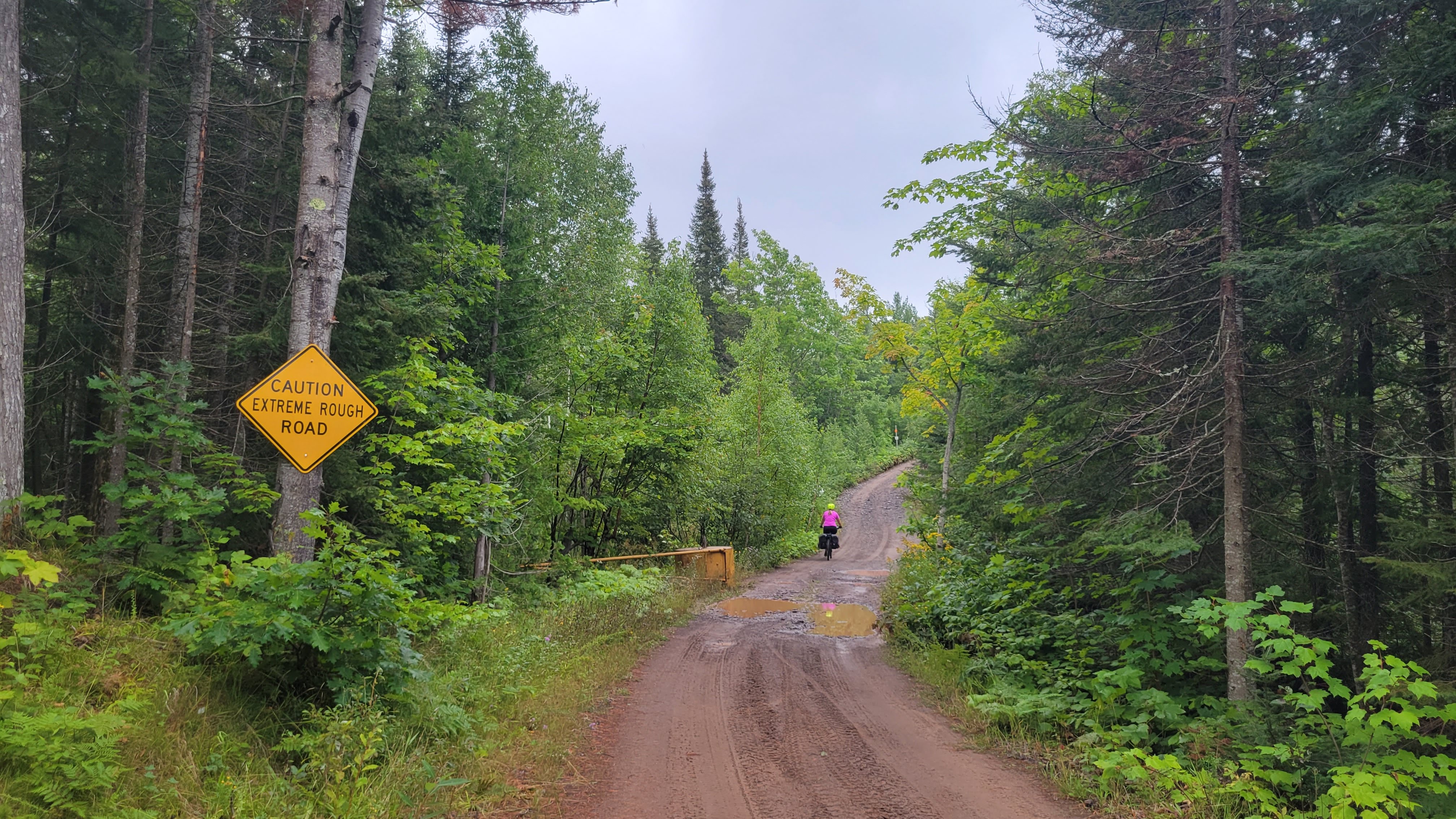
Turning left and seeing “Extremely Rough Road Ahead”
Ending up on very rugged, rocky ATV roads – making another turn and it’s been freshly graded with a few inches of loamy red dirt. For the next several miles. We pushed our bikes a lot up hills
Bye, cabinpeaceful scenerygorgeousso magicalstill smilingbeginning of the chunkfreshly groomed loamy red dirt ATV trails
Putting too much power through my pedals to get up a technical uphill trail when I hear a ka-CHUNK. Get the chain back on the cogs – but Jess notices the smaller front ring is loose. She tries to tighten the bolts but they won’t tighten. And two of them are missing. We put it the chain on the big chainring and I delicately pedal (and walk) the last few miles to the road.
We stop in a parking lot of a marina before deciding to ride back to Copper Harbor’s bike shop. We’re in 15 miles, it’s been 3 hours, and we have a 15-mile ride back on the paved roads. I pedal as gently as I can. US41 is beautiful.
Losing the two spacers we had at some point, Eric at Keweenaw Adventure Company McGuyver’s my small chainring together so I can finish the ride. I am eternally thankful.
As soon as my bike is fixed and recombobulated, we get a Squall Warning and take shelter under the bike barn to wait out the rain
We decide to just ride US41 to where we would have picked up the trail and take that in to camp.
riding back to Copper Harbor Sqall!back on ATV trailsmore trailsstill more trailsour tiny campsitethe eponymous copper mine
Feeling a bit tired from the extra long day, we decided to reroute to a more direct way to our next campground. We found some nice quiet dirt backroads, spent some time on US41, crossed the bridge at Houghton, and enjoyed lunch by the canal before climbing out and making our way to the Bill Nichols Trail. It has moments of hardpack but far more chunky loose gravel, random sand pits, and abundant shade.
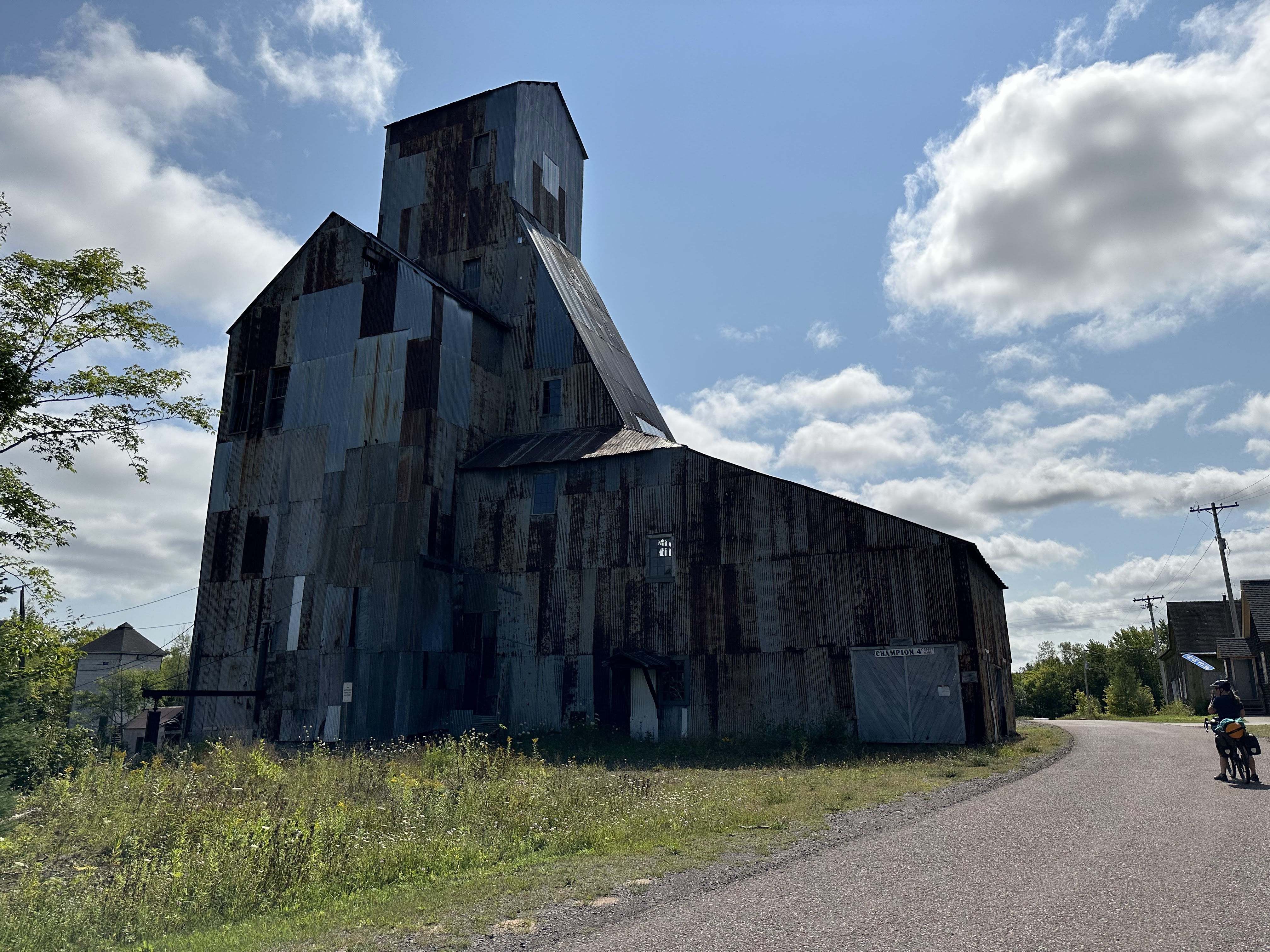
Champion Mine was a nice surprise to check out before continuing on.
We originally planned to camp at a dispersed campground, but as we passed Twin Lakes State Park, we noticed it was open. We scored an amazing site with lake views.
beautiful sceneryflowers outside Pat’s Foodslunch time!Champion Minethis part of the ATV trail had been freshly scrapedTwin Lakes Campgroundview from my tentJess enjoying coffee in the chilly morning air
We settled in for the night, thrilled with our luck at finding a site that had bathrooms, showers, and an electric hookup to charge our devices. As the night wore on, it felt colder than it had been at any point in the trip. we piled on more layers in our sleeping bags, and cinched the hood over our faces to keep warm.
My alarm goes off at 7am and it’s cold. We pop out of our tents to agree that 36* F is not something we want to try to do anything in – and went back to sleep in our sleeping bags until 8:30am, when it was in the 40s.
We pre-rerouted Day 3 in Michgan because the intended route would have been 70 miles and we’re starting to feel tired from hauling 40 pounds of stuff on unforgiving chunky roads. We followed the route until Mass City, which we then jumped on the road and headed up to Ontonagon, along Lake Superior, and into the Porcupine Mountain Wilderness Area.
Mass City is the poster child for poverty in rural, small towns. The market didn’t have much food so we went to the gas station for lunch. Two kids on dirt bikes were brapping around; an older guy was providing alcohol to younger girls; the gas station ladies were smoking pot in the bathroom. It was a bit depressing to be in a depressed area.
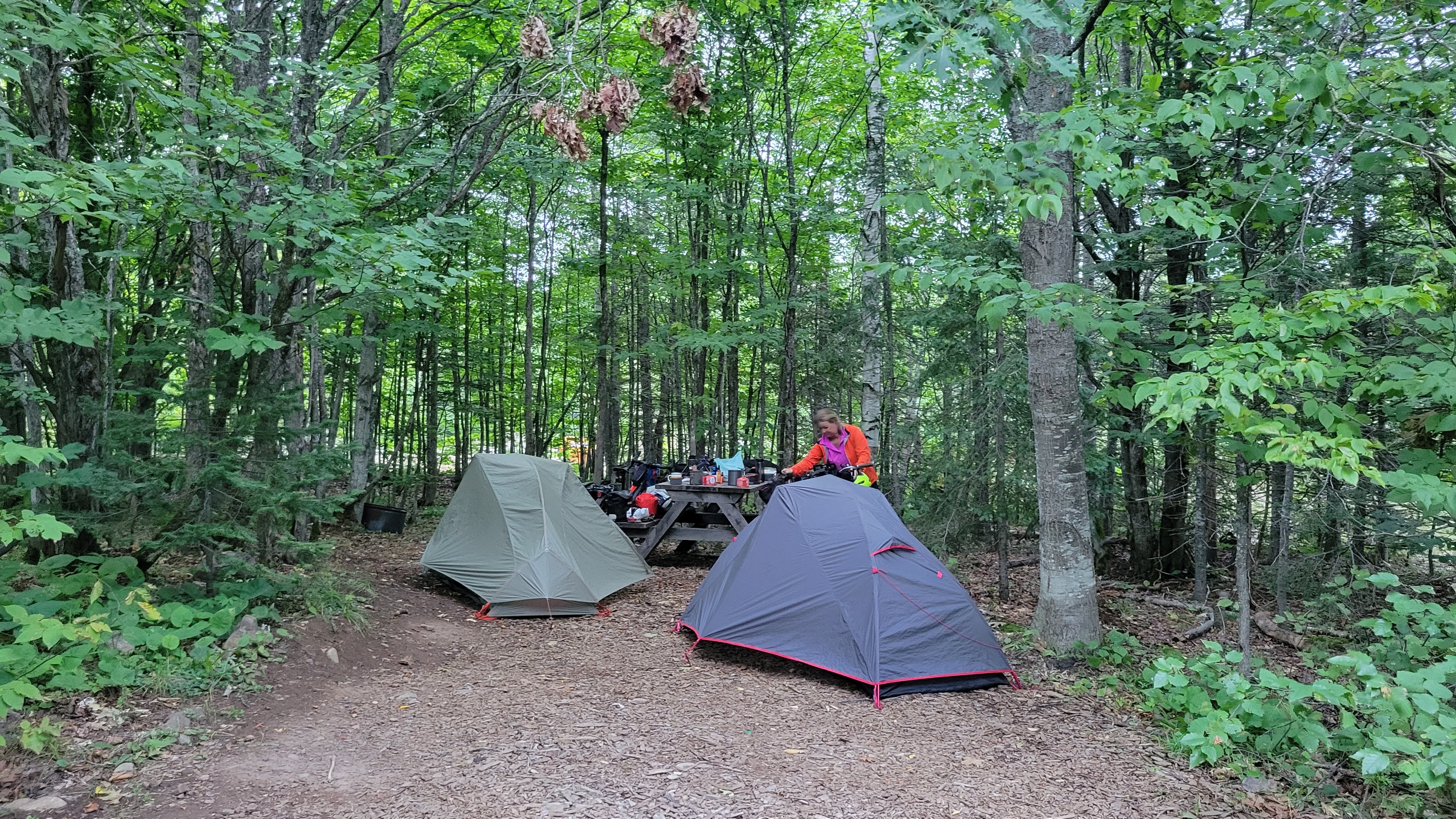
The Porkies were great! We had a site with ample distance between our tents and our cooking area. We stashed our bear bags in the bear-proof trash container for the night.
how much more of this sand?logging roadssky tresslesJess is braver than meLake Superior in the backgroundof course we had to take a picalmost to campawesome, large campsite
Pedaling out of the Porkies the next morning and making our way to our layover in Ironwood.
A really big hill that we had to take a break at the top. Our legs are definitely feeling the previous days now.
Overgrown two-tracks that had us dodging babyhead rocks and tree branches – and a culvert crossing with super steep banks
Beautiful scenery into Bessemer
Iron Bell Bike Path was a welcome respite.
We came out of the woods to this viewstill smiling! steep culvert washoutmore time in the woodsso nice and shadythe road to our layover
Layover in Ironwood, MI (Days 10-11)
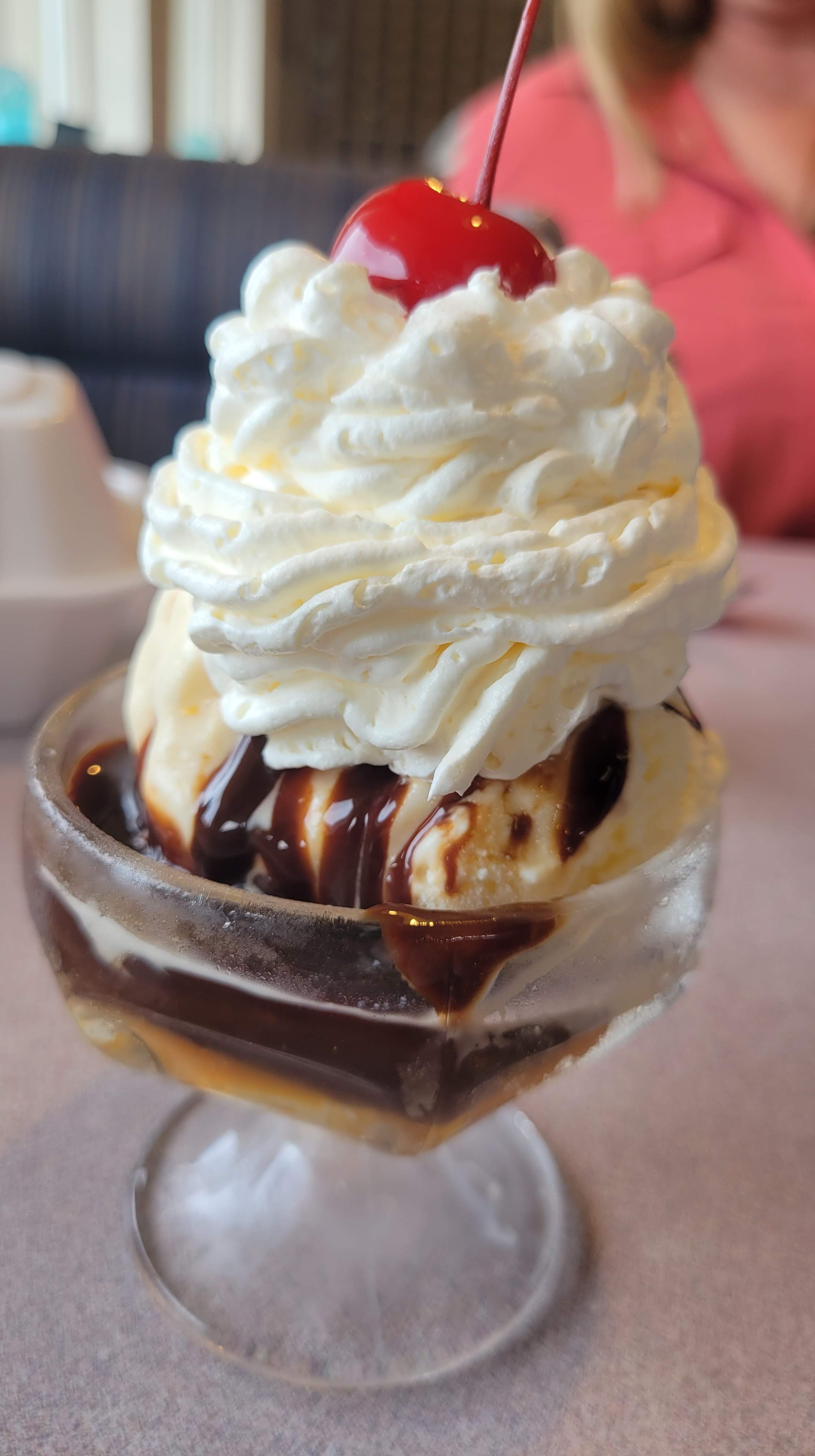
We deeply craved a day off to rest, shower, do laundry (last time we cleaned our clothing was in Grand Portage), and eat. We walked a mile to the laundromat and then had lunch next door while we waited for the washer. Real food tastes so good now, and we ordered the World’s Smallest Sundae each to celebrate how far we’d come.
World’s smallest sundae
The next day we took a taxi to Walmart to pick up everything we would need for our final four days across Wisconsin, as all four days would be mostly without any resupply options. It felt good to sleep in a bed again.
With access to cell service and internet, we were able to connect with out families and started to really miss them. The weight of being gone for so long was hitting hard.
Wisconsin (Days 12-15)
We knew this state was the least amount of total miles but the most remote. The route doesn’t pass through many towns, so it was important to have what we needed each day. Our lunches have consisted of BumbleBee Chicken Salad To Go kits on the side of the road, supplemented with whatever beverage we bought at the last gas station we saw and maybe chips or a ClifBar. We basically eat like college kids again – and eat a lot, all the time.
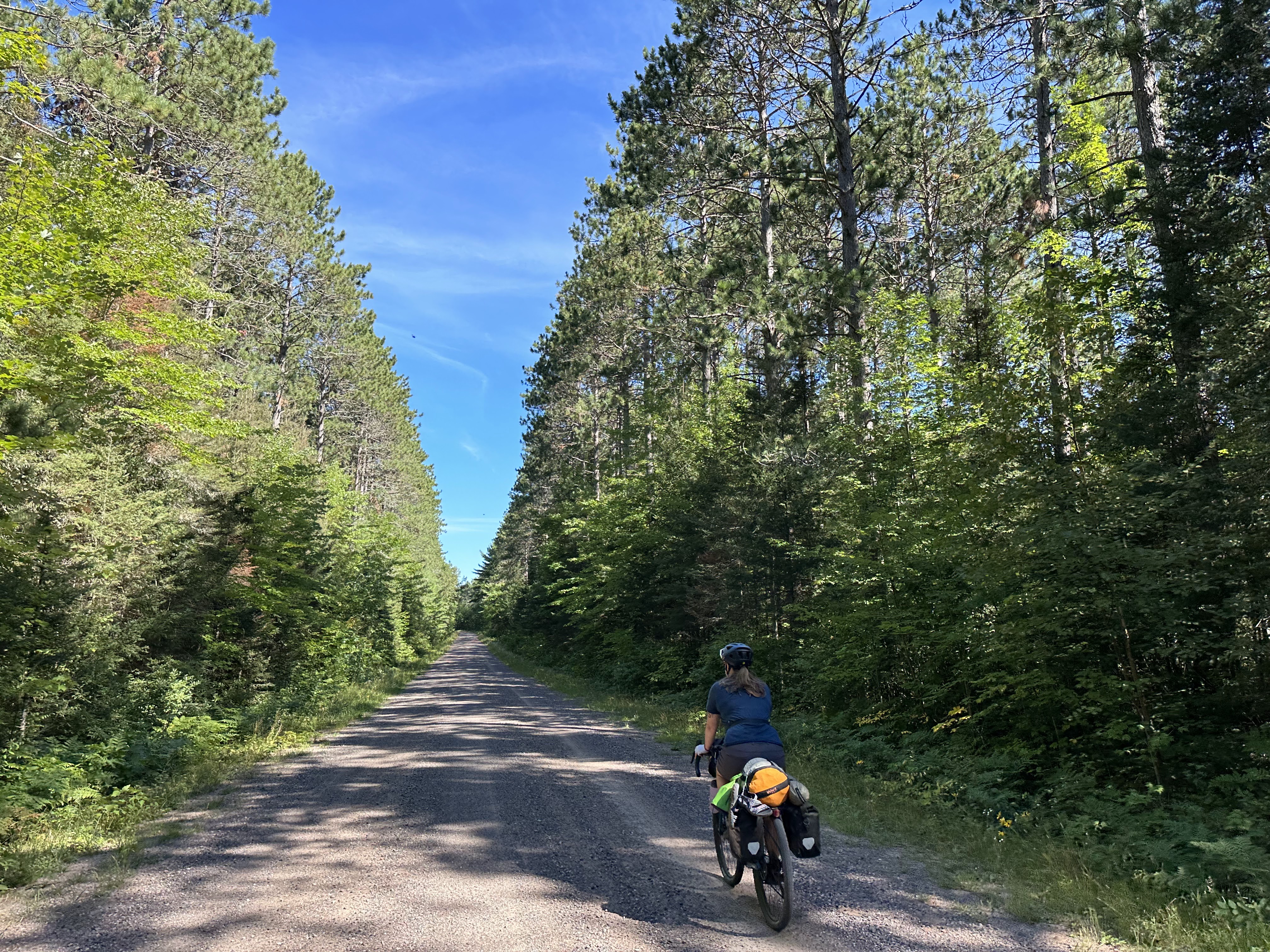
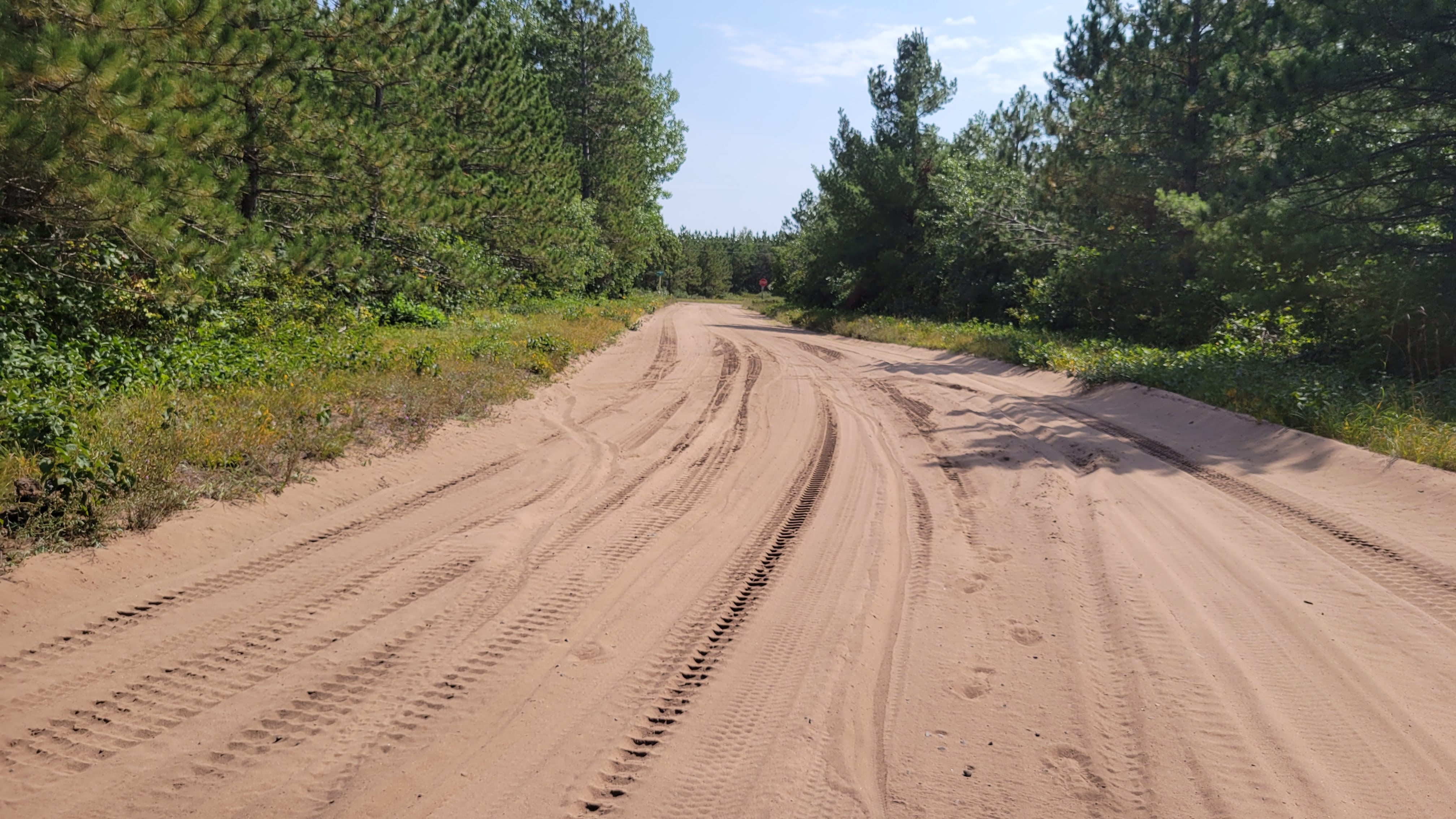
Unfortunately, the route maps indicated most of the roads were paved; we discovered quickly that most of the roads were loose gravel or worse, sand. This was incredibly disheartening as we labored through another 20-miles-in-three-hours day.
highlights from Wisconsin
Leaving Ironwood, we stop at the Hiawatha statue in a town park
Within a few miles we are in Wisconsin without fanfare – no sign or obelisk to denote the passage.
We are missing our families, tired, and annoyed at every small incline on loose gravel. It’s a mentally tough day.
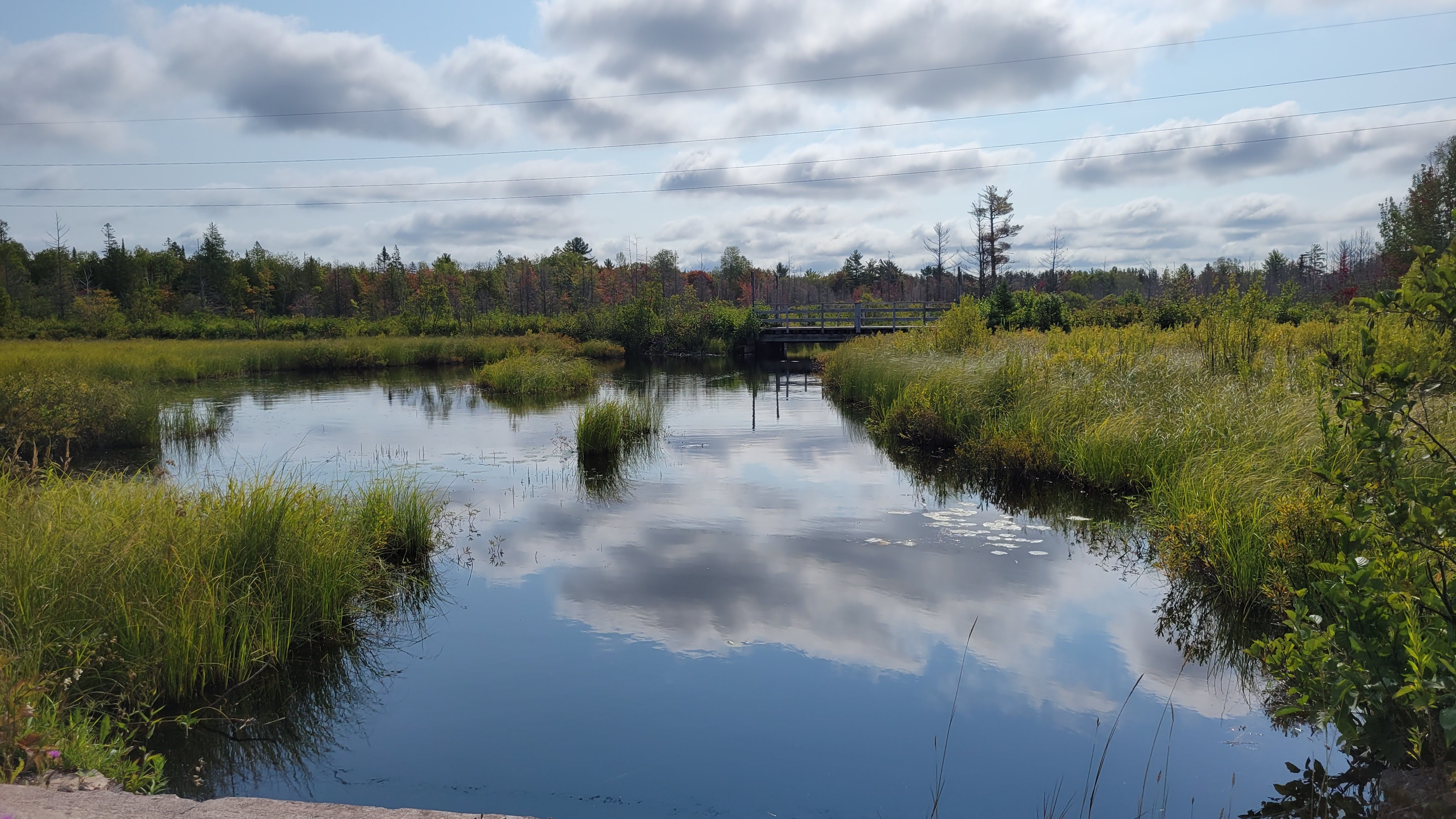
But Wisconsin is a different kind of beauty than Minnesota or Michigan – and we enjoy the changing landscape – even if we are on ATV roads for the rest of the route.
We get to our Forest Service campground and have the most magical site
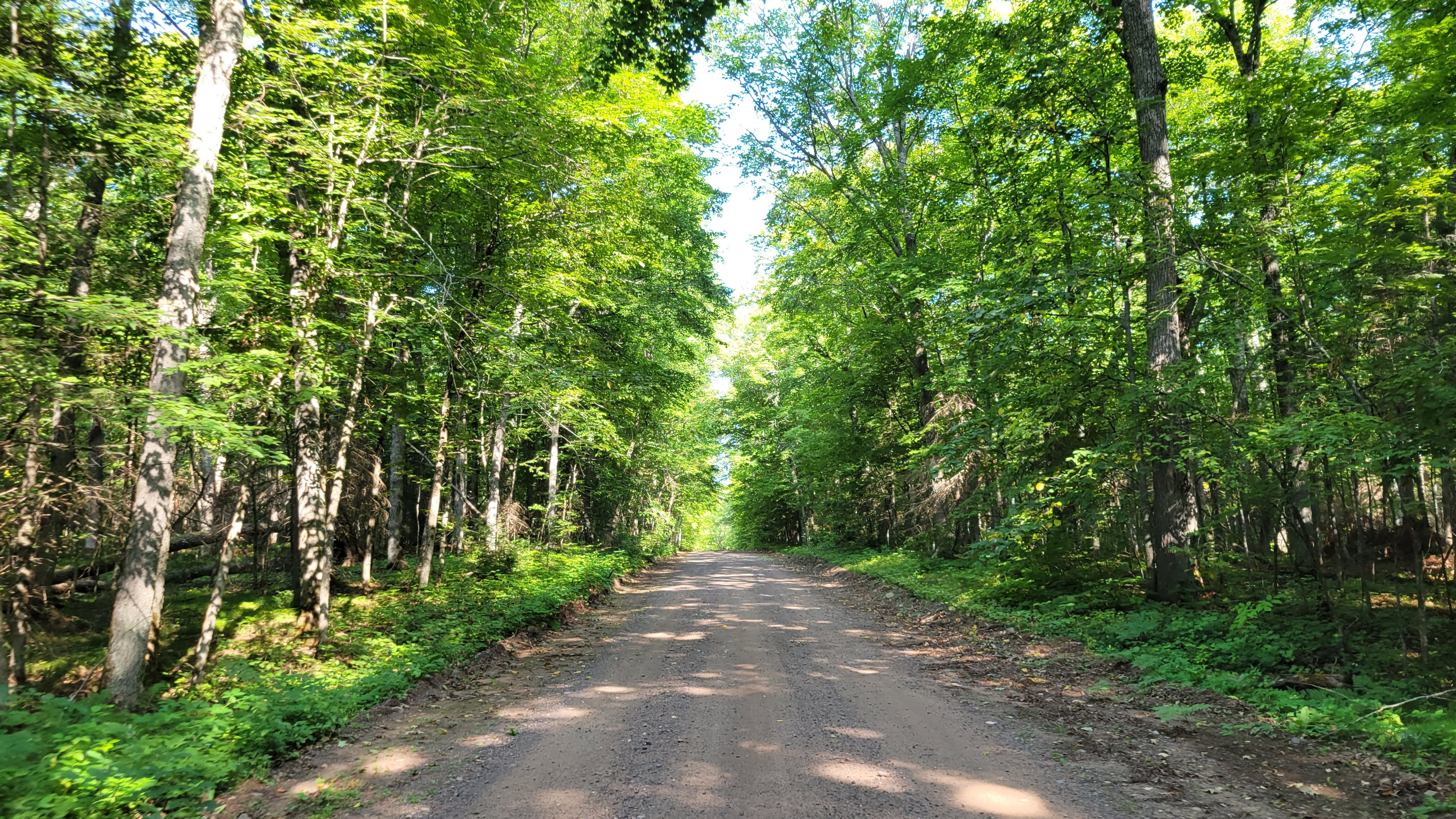
the road cut through a lakebasically where we rode every daythe rocks show the lake is down pretty lowmore loose gravel roadsmore sceneryheading into the woods againso much waterthere were definitely moments we thought we were the Ding Dongs in the areapedaling in the shadesuper cool line of trees on the way to our campsitehome for the night
The next morning we go out little too fast because I just want to get to the next campsite and relax again. By lunch, Jess is chugging a RedBull and I’m realizing I haven’t eaten enough and don’t have anything with caffeine to fuel the afternoon. OPE
Getting to a turn onto singletrack and NOPE’ing it. We ride the rustic road up the the County Road and head west on the pavement.
We see a sign for the campground we’re looking for and take the shortcut.
We score another great lakeside spot and refuel before turning it in early. The next few days are expected to be hot.
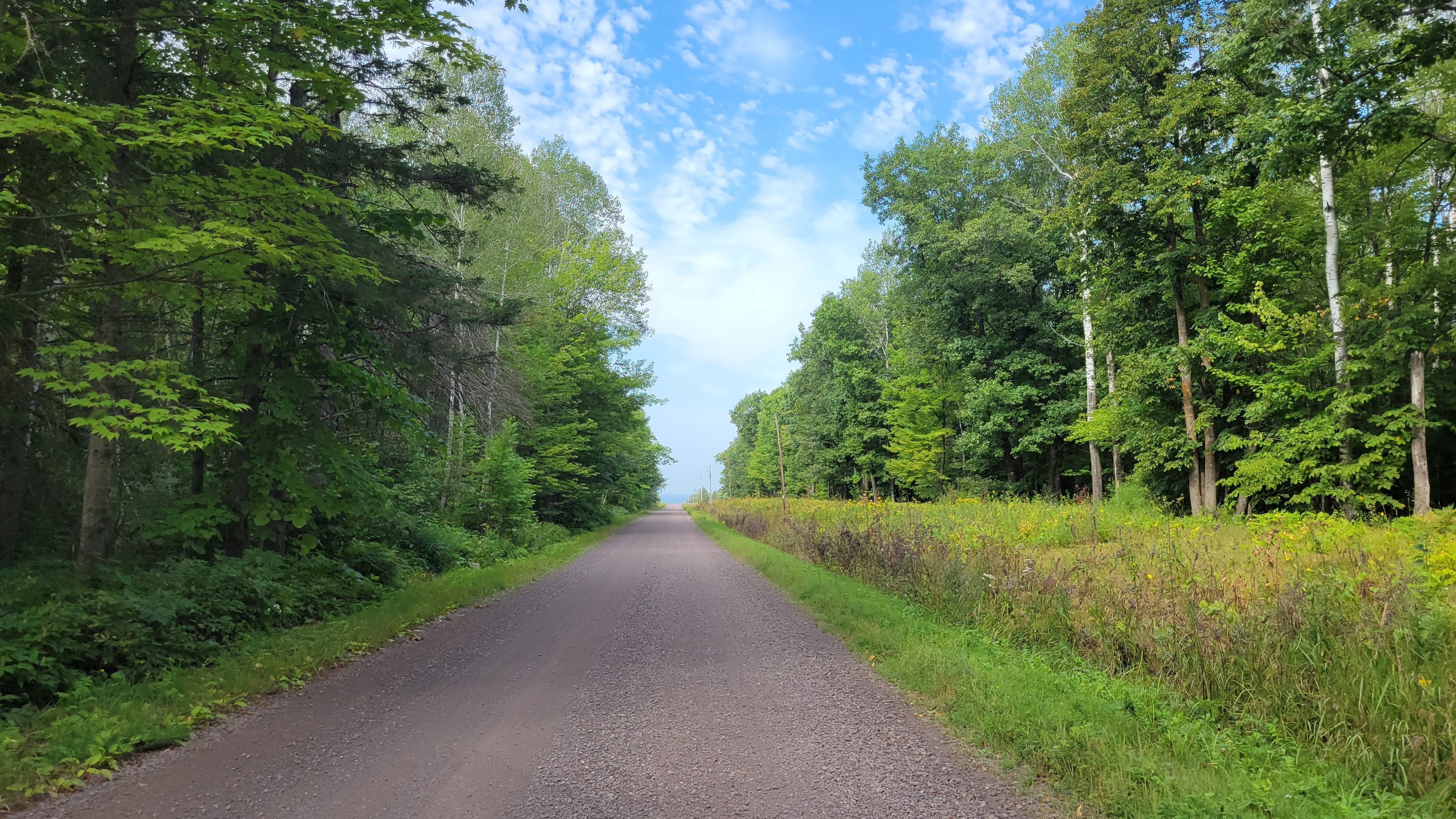
real and true photo of the lake just after sunrisevery lovely two-trackit was a joy to ride onhey look -still smiling!my passenger for a few milesshady roads are my jamspoilers: the rustic roads did not endhome for the nightour site!
Jess captured this sunset
It’s the final two days! I want to tell you that there was some poetic moment of bittersweet emotion about this, but the reality is we were super ready to finish, finish strong, and go home.
We stocked up at the local General Store and headed to Solon Springs on quiet dirt and loose gravel roads.
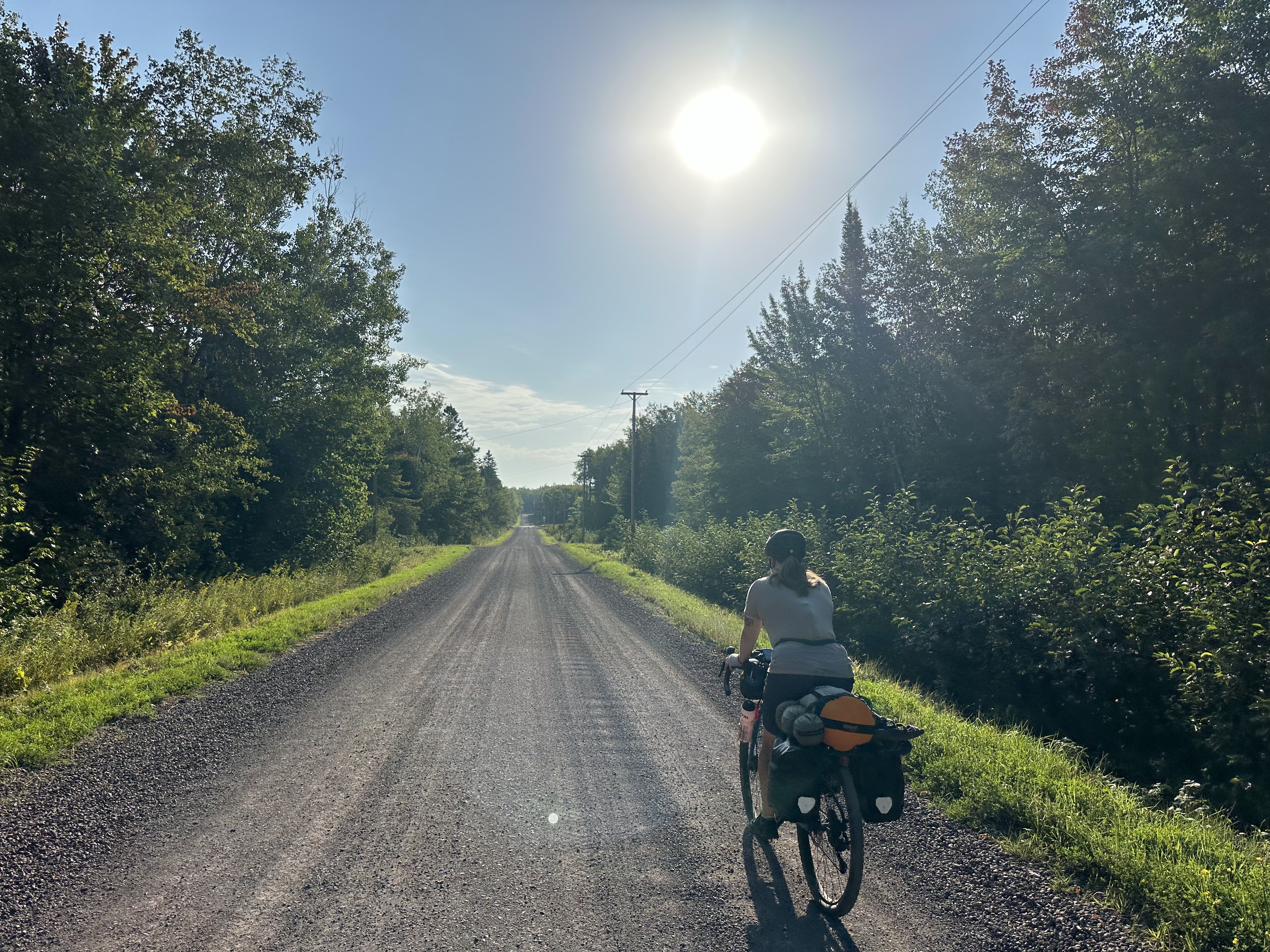
At some point we popped out of the forest and found ourselves on an exposed, loose gravel road that was a series of rollers. It was hot and we stopped in the shade for a bit and chat with two hunters who had just finished setting up their stands.
Back on ATV “roads” what were mostly sand. Deep sand. Jess floated through it while I struggled to keep my bike upright. We both nearly crashed several times though – the deepest sand would grab the wheels and pull them in whatever direction it wanted.
We get to our final camping site in a town park after what felt like the longest day of our lives.
It’s hot, we’re sweaty, and gross. So we shower in the bathhouse, but the water is sulfered, so now everything smells vaguely like rotten eggs.
It’s 80*F when we crawl into bed at 8pm.
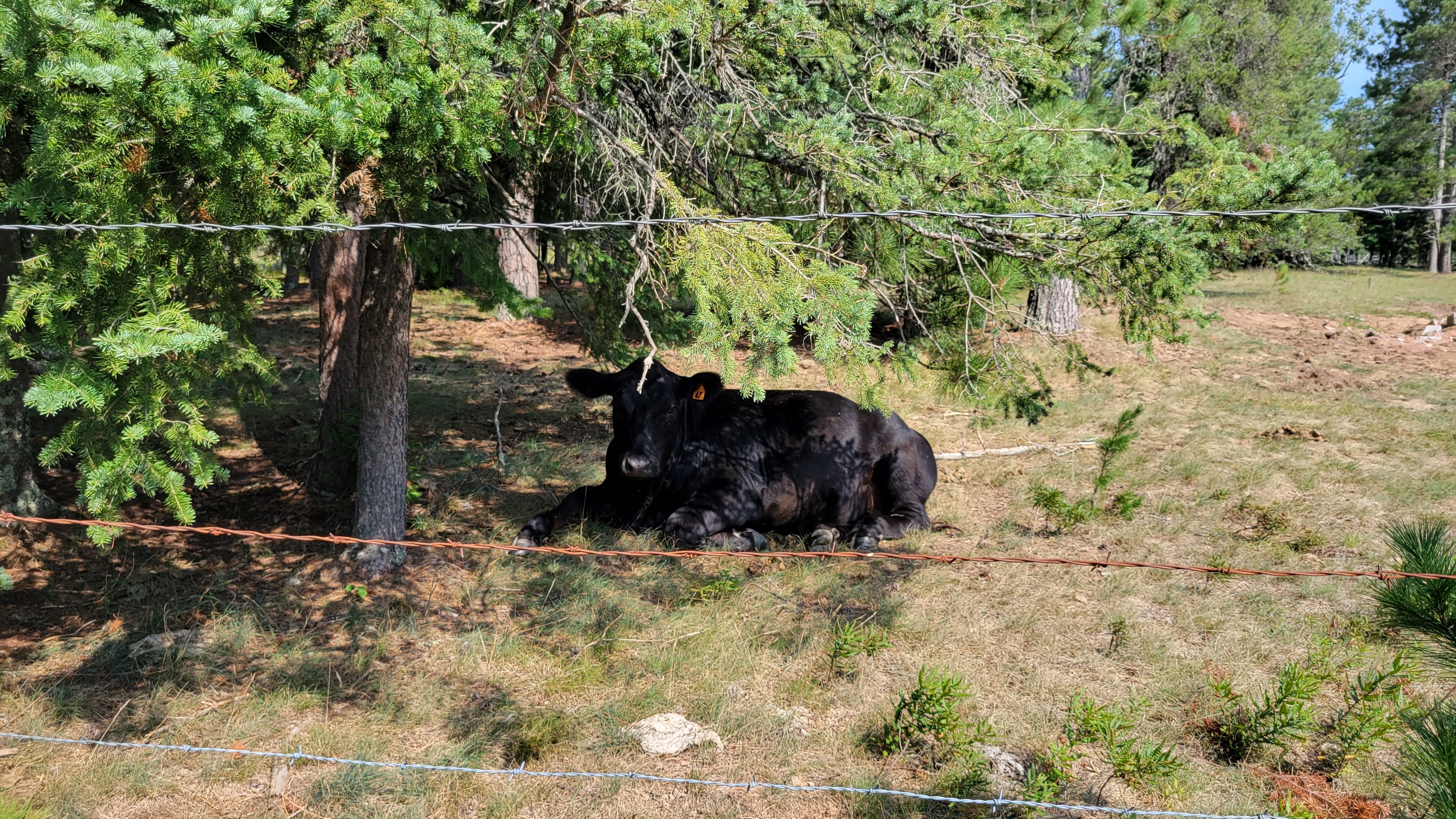
well stocked general storesmooooth pavementback in the woodsfreshly scraped!STILL SMILINGcow in reposethe road curves left – but you end up going straight ahead up the hillJess capturing me spinning up a hilldeep sand for a few milesour last campsite for the trip
Our last day and it’s going to be a scorcher so we get up early and head out by 8:30am to get water from the grocery store.
Oh look, more loose gravel backroads!
We were chased or approached by aggressive dogs three times before we decided to reroute to more main roads for a bit.
Soon the forest gave way to open farmland
We saw a flock of turkeys and they scattered as we rolled up – some flew away, some ran under the fence. But one smaller turkey was near a part of the fence that didn’t have an easy way to duck under – and the poor thing just kept running into the bottom of the fence frantically, trying to get to the other side.
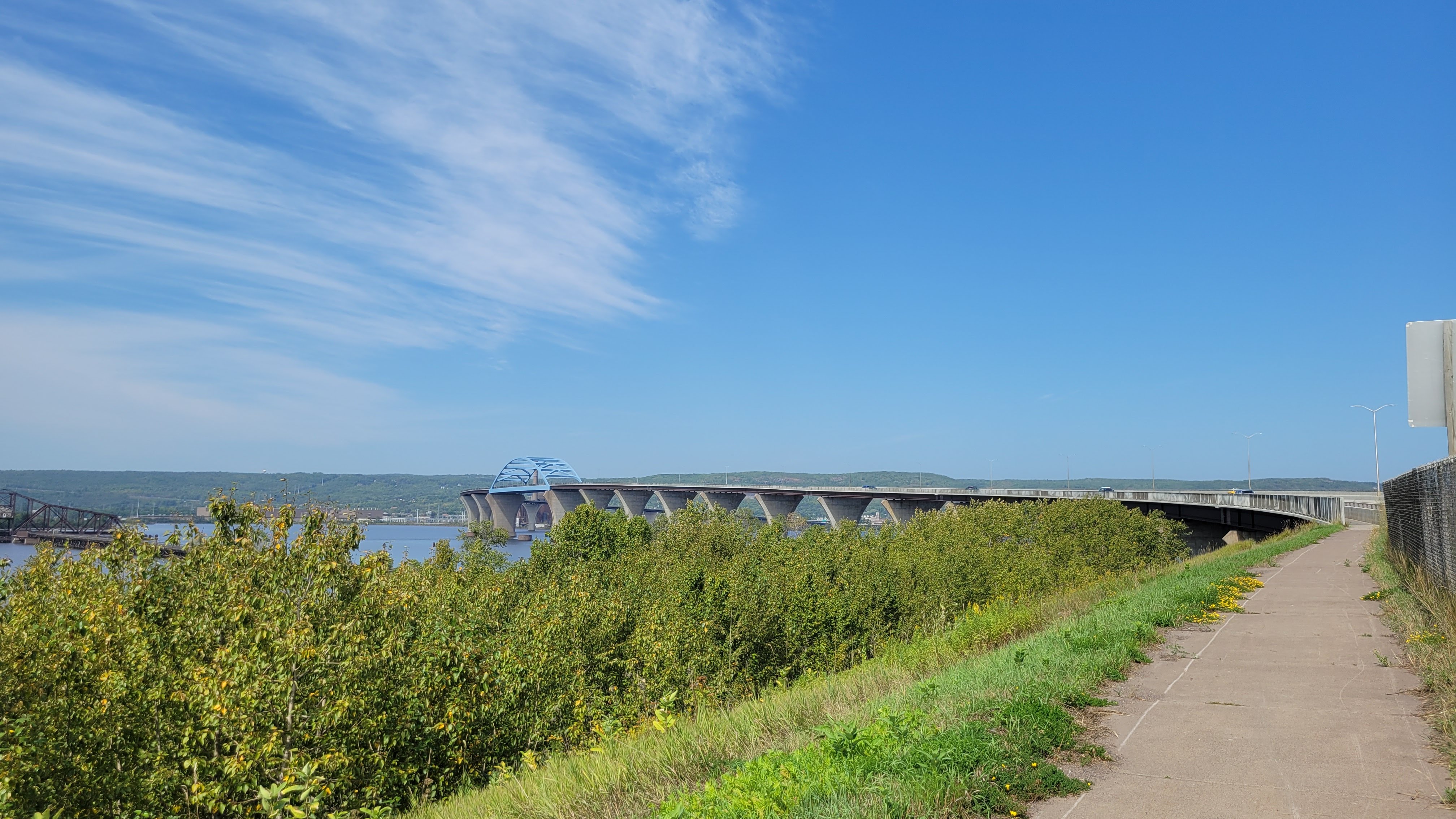
Superior, WI is remarkably flat
One mile before we get to the bike path on the bridge to Duluth, a woman stops at a stop sign and then proceeds even though we were entering the intersection and have the right of way. Her passenger is yelling at her to “stop, bikes!” She does, in the middle of the intersection, but then starts slowly rolling towards us as we pass in front of her. I yell at her “YOU CAN STOP NOW. YOU CAN STOP.” Literally 2 miles from the end of our epic adventure and we are almost hit by a careless driver. We were certainly in more danger in towns and cities than we were out on the country roads.
last minute water and snacksearly start due to expected heatthis was the third dog to chase or be aggressive towards usthe route had us crossing in-service railroad trackslast bits of forestquintessential Wisconsinthe bridge back to DuluthSTILL SMILING 15 days later
Epilogue
When we rolled up to our hotel in Duluth, an undenyable sense of accomplishment and pride engulfed us. The sheer intensity of biking and camping and adjusting on the fly; broken bikes and flat tires; creepy campgrounds and freezing temperatures; WE DID IT.
before we could get cleaned up, we had to walk to the bike shop to get our bags, which had our clean clothing for going home
We celebrated with a restaurant meal, doing two loads of laundry, repacking our bikes and bags, and going to sleep in a bed again. The next morning I had Dwarf King taxi take me to the airport to pick up the rental car.
Upon sitting in the driver’s seat I had to think for a minute about how to drive.
We loaded up our bike bags, hit the road to Minneapolis, and eventually our flights to our respective homes.
so good to be home
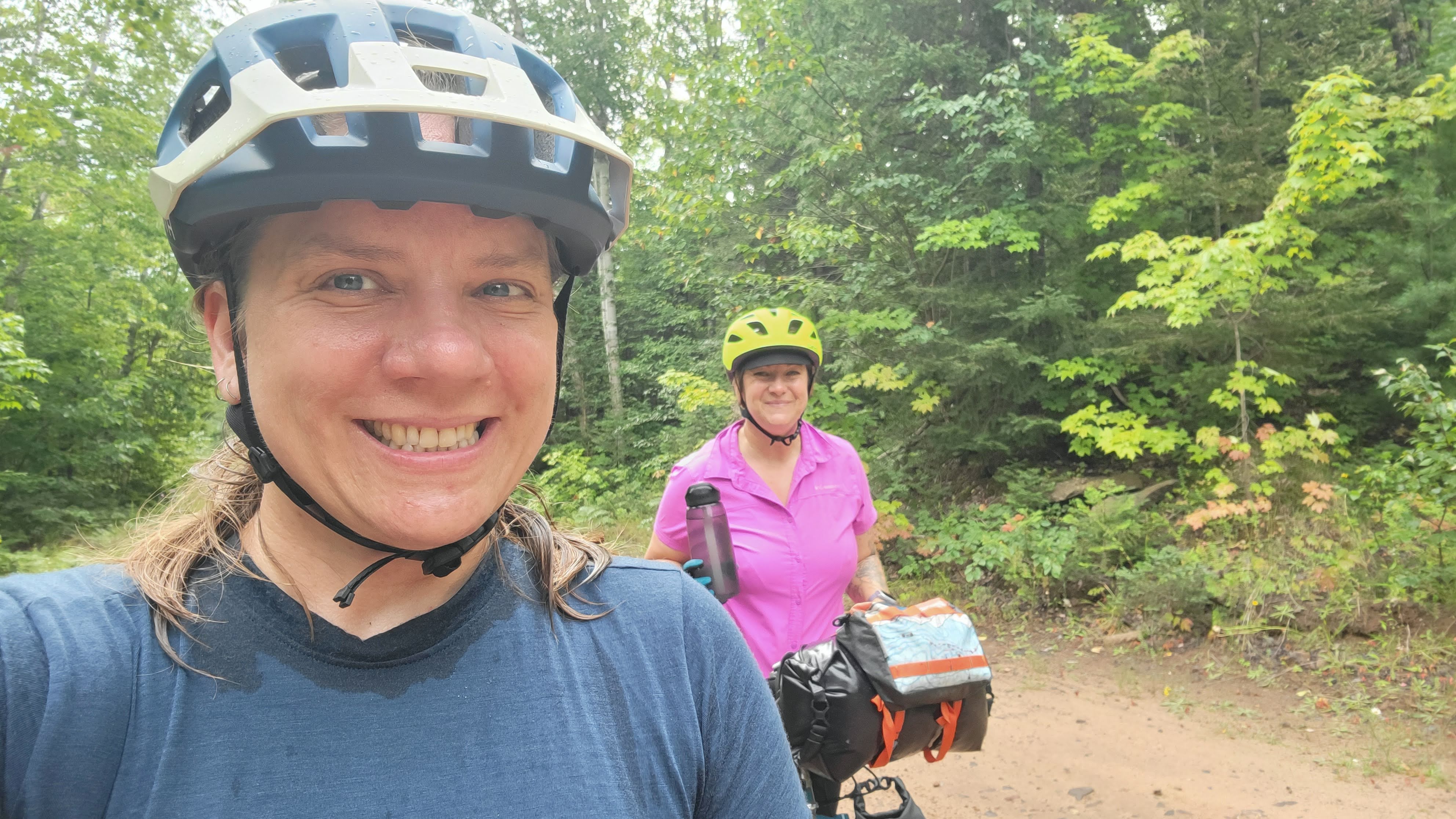
Overall, I would definitely do this route again with a friend. Jess and I were exceptionally well-matched as adventure partners, making the whole trip so enjoyable. Our focus was to have fun, and we certainly did despite challenges along the way.

































































 wife. mother. awesome girl.